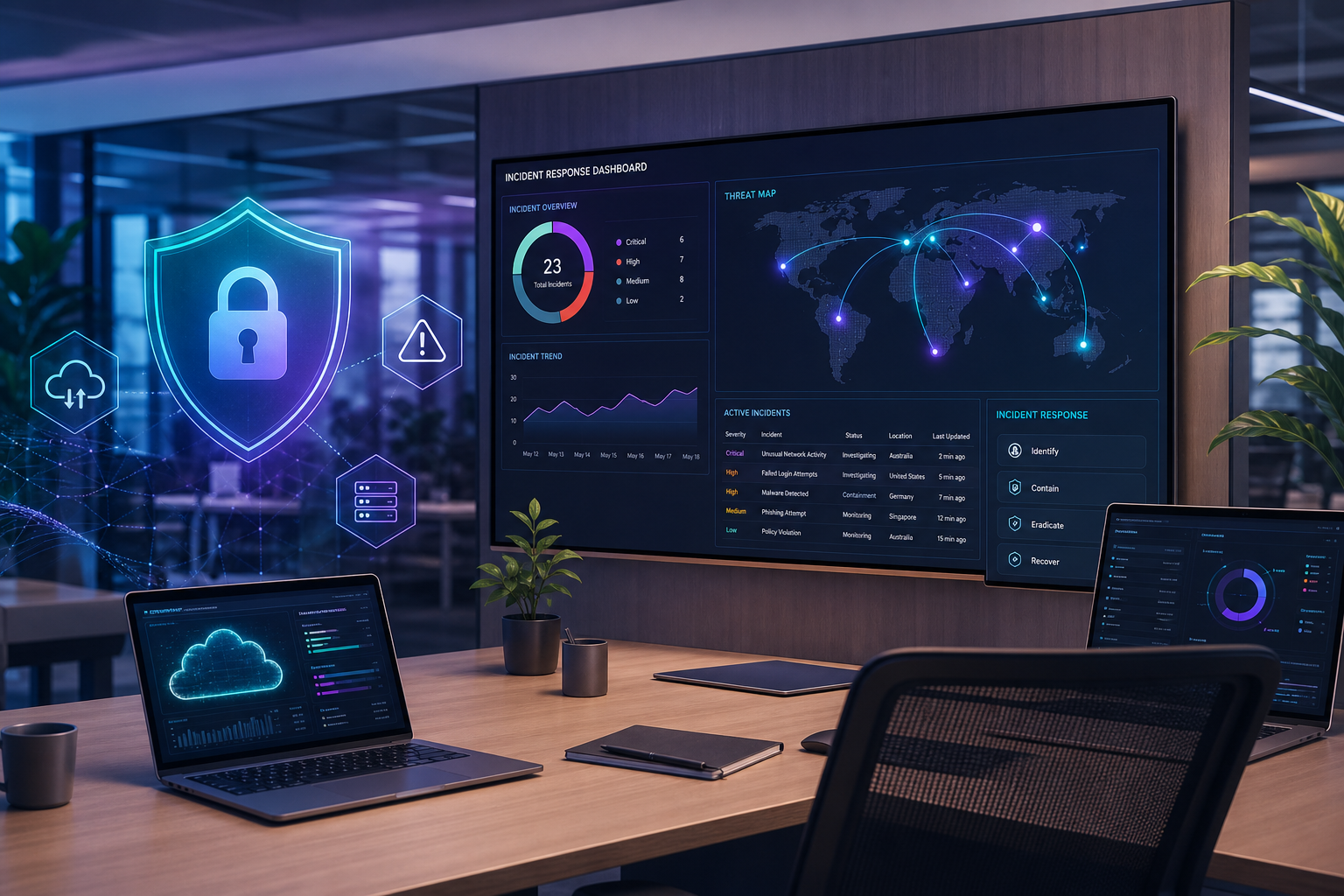
Recent headlines about alleged data breach handling at a major global technology company are a useful reminder for Australian small and medium businesses: cybersecurity is not only about stopping attacks. It is also about knowing what happened, proving what happened, and responding quickly when customer data, business systems, or supplier platforms may be affected.
For business owners, the lesson is practical. A breach response plan should not sit in a folder waiting for a crisis. It should be connected to daily IT management, cloud access, staff permissions, backups, websites, software systems and vendor relationships.
Why this matters for Australian businesses
Many SMEs now rely on cloud platforms, outsourced software, managed IT providers, online forms, CRM tools, payment systems and AI-enabled services. That creates convenience, but it also creates a wider responsibility to monitor access, protect data, and understand how third-party systems handle sensitive information.
If a cyber incident occurs, the questions arrive quickly:
- What systems were affected?
- Which accounts or devices were involved?
- Was customer, staff, financial, or operational data exposed?
- Who needs to be notified?
- Can the business keep operating safely?
- Is there clear evidence for insurers, regulators, clients, and internal decision makers?
Businesses that prepare these answers in advance recover faster and communicate more confidently.
Five checks every SME should make now
1. Confirm where sensitive data lives
Start with a simple data map. List the systems that hold client records, email, invoices, website enquiries, HR files, passwords, contracts and project information. Include cloud storage, SaaS platforms, custom software, website plugins and external support providers.
2. Review admin access and staff permissions
Too many businesses still have shared admin accounts, old staff logins, weak password practices, or missing multi-factor authentication. Review who can access key systems and remove anything that is no longer needed.
3. Keep useful security logs
Good logging helps a business understand suspicious activity. Email sign-ins, website admin logins, cloud file access, firewall events and endpoint alerts can provide important evidence during an incident. Logs should be retained long enough to investigate problems properly.
4. Test backups and recovery steps
Backups are only useful if they can be restored. Test backup recovery for websites, business files, databases and critical applications. Make sure at least one backup is protected from ransomware and accidental deletion.
5. Create a clear incident response contact list
When a breach is suspected, staff should know who to contact. That may include internal managers, IT support, cyber specialists, legal advisers, insurance contacts, website developers, software vendors and communications leads.
Supplier risk is part of cyber risk
Many incidents do not start inside the business. They can begin with a vendor, an exposed website plugin, a compromised email account, a weak integration, or an unmanaged cloud service. SMEs should ask suppliers how they protect data, how they report incidents, and what support they provide if something goes wrong.
This is especially important when using AI tools, automation platforms, outsourced software development, CRM systems, payment services and managed IT environments. Convenience should not come at the cost of visibility and control.
How Xpansion Technologies can help
Xpansion Technologies helps Australian businesses build practical, secure and manageable technology environments. Our team can assist with IT support, cloud systems, websites, software development, automation, cybersecurity improvements, data protection and AI adoption.
We can help review your current systems, strengthen access controls, improve backup and recovery, assess website and software risks, and prepare a realistic incident response plan for your business.
Need help checking your business technology risk? Contact Xpansion Technologies to discuss practical IT, software, cloud, cybersecurity and automation support for your organisation.



Leave a comment