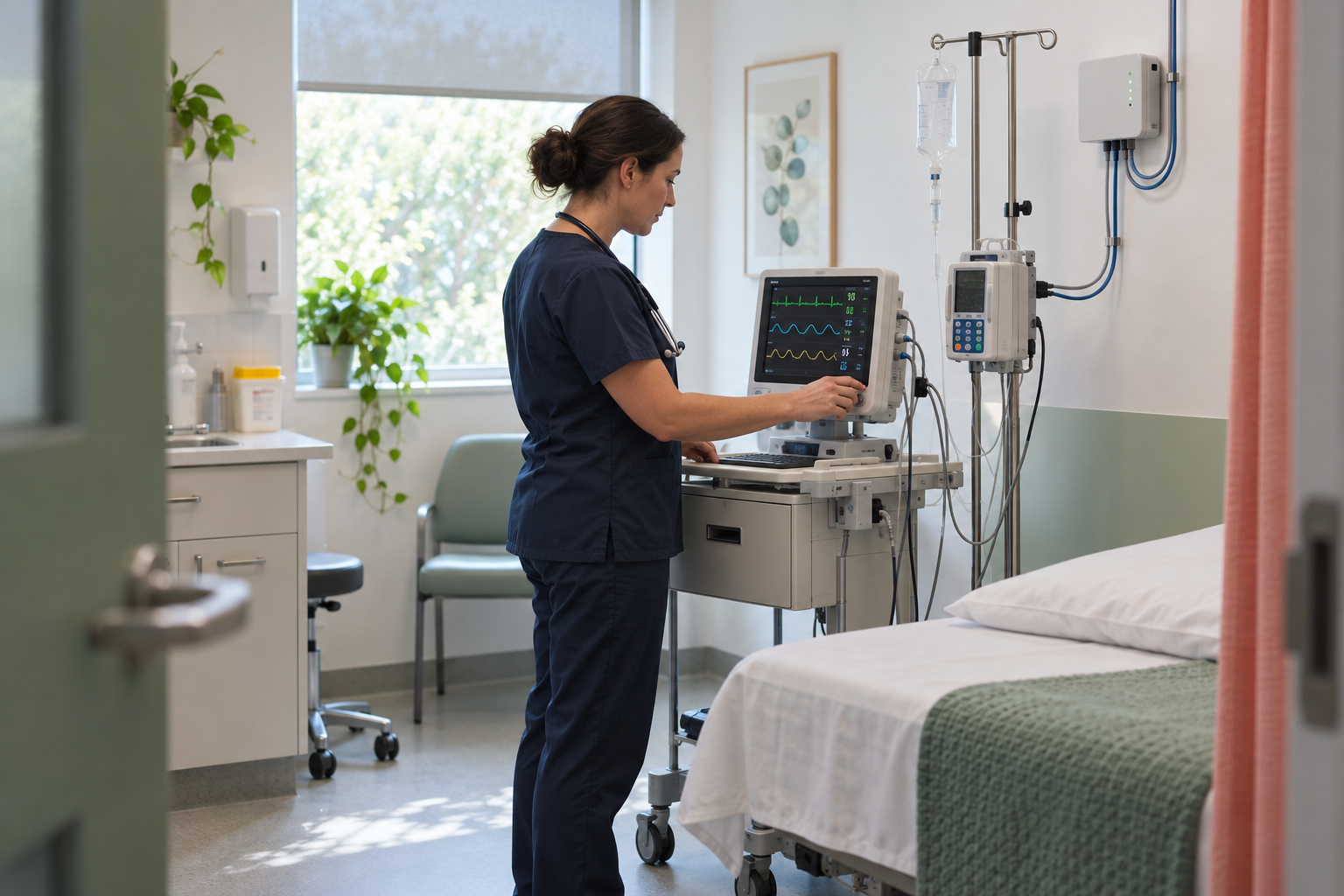
Connected medical devices can improve patient care, reduce manual work and help clinics capture better information. They also create another layer of technology that needs to be secured, maintained and included in privacy planning.
Know every connected device
Maintain an inventory of vital-signs monitors, diagnostic equipment, infusion pumps, tablets, gateways and software integrations. Record the device owner, network location, supplier, support contact and replacement plan.
Reduce unnecessary access
Change default credentials, disable unused accounts and restrict remote administration. Separate clinical equipment from general office traffic where practical, and give suppliers only the access they need for support.
Patch and monitor safely
Use a documented maintenance window for firmware and software updates. Confirm clinical compatibility before changes, monitor unusual connections, and keep a clear escalation path if a device behaves unexpectedly.
Protect health information
Limit access to health information, secure exports and check how device data moves into practice-management or cloud systems. Test incident procedures so staff know when to isolate equipment, contact support and protect patients.
Sources



Leave a comment