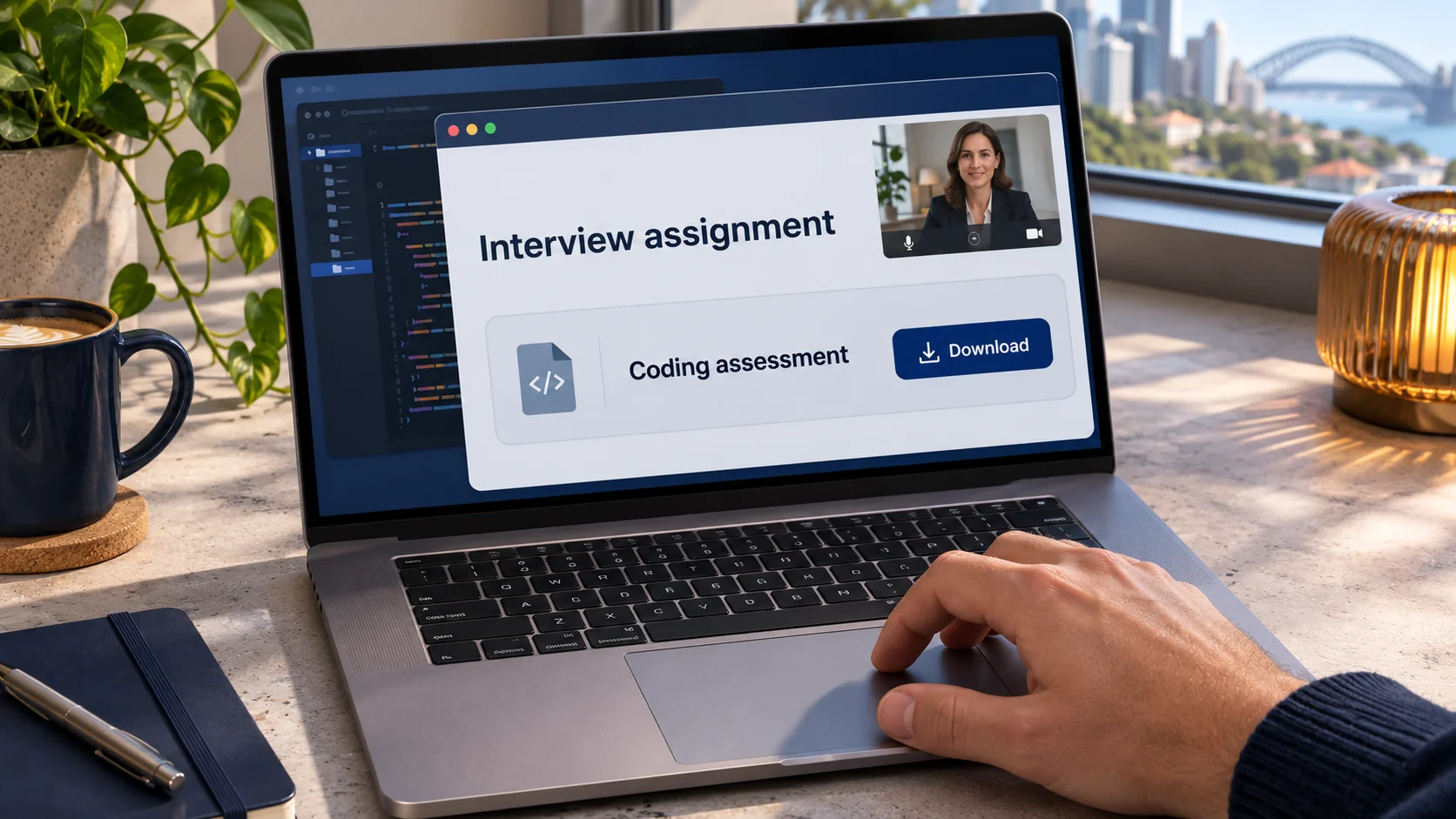
Original AI-generated illustration of a recruitment lure, not evidence or a screenshot of the Binance incident.
A promising job opportunity. A convincing interview. A coding assignment to download.
According to Binance’s account, that familiar recruitment process became part of a months-long operation that ended in approximately US$6.3 billion, or A$9 billion, in cryptocurrency being stolen on 29 October 2026. The Australian-dollar amount is a rounded reported equivalent, not US$9 billion.
For Australian businesses, the lesson goes beyond crypto: a compromised employee device can become a pathway to systems that hold money, customer information and operational control.
What happened, and whose money was at risk?
Attackers made unauthorised transfers from Binance, the world’s largest cryptocurrency exchange by trading volume. Assets included Bitcoin, Ether and other cryptocurrencies.
Binance suspended withdrawals and worked with token issuers, investigators and law enforcement to freeze assets. It has committed to absorbing the financial impact using company resources.
Frozen, recovered and replenished are different things. Freezing assets restricts their movement. Replenishing customer backing with company funds does not mean investigators recovered the stolen cryptocurrency. The headline theft figure is not a final unrecovered-loss figure.
How did a job interview reach the wallets?
Reuters’ reporting of Binance’s initial investigation describes connected stages:
- A tampered download: In June, a wallet-team employee downloaded compromised software. Binance said it replaced the device and changed credentials, but information about the team’s roles had been exposed.
- A convincing recruitment trap: In September, another engineer attended interviews for a fictitious company and downloaded a coding assignment containing malicious code.
- Movement into sensitive systems: On 20 October, attackers used the compromised computer and an internal AI tool to gain control of additional engineers’ systems.
- Unauthorised transfers: On 29 October, attackers combined compromised access, stolen credentials and a malicious script to move cryptocurrency.
The public reporting does not fully explain how the internal AI tool enabled access. It would be premature to describe this as AI breaking blockchain encryption. The reported chain was compromised devices, stolen access and the ability to perform sensitive transactions.
Who has been affected most?
There is no verified public ranking of individual victims or their losses in the sources reviewed. Naming a prominent founder or investor as the biggest personal victim would be speculation.
- Binance: The company has promised to cover the financial impact.
- Customers: Withdrawal restrictions disrupted access, even where account balances remained visible.
- Businesses using the exchange: Interrupted access can affect trading, settlement and liquidity planning.
A reimbursement commitment does not eliminate operational disruption or counterparty risk.
Who does the FBI blame?
The FBI has attributed the attack to North Korea, identifying the activity as TraderTraitor. Its advisory says investigators observed stolen assets being converted primarily into Ether for further laundering. North Korea has denied responsibility, according to Reuters.
Australian government guidance separately documents North Korean fake-interview campaigns targeting IT professionals. Similar techniques make that guidance relevant, but do not make every campaign name interchangeable.
Protect yourself before the “assignment” arrives
- Verify recruiters independently. Contact the company through its genuine website, not details supplied only in the conversation.
- Isolate untrusted code. Do not run recruitment assignments on a device holding work credentials or wallet secrets. Any assessment environment should contain no sensitive accounts.
- Protect accounts and wallets separately. Use phishing-resistant authentication where supported and keep recovery phrases offline. MFA cannot make an infected device safe, and your exchange login does not control the exchange’s internal security.
If compromise is suspected, stop using the device for sensitive activity and contact IT or the platform through a verified channel.
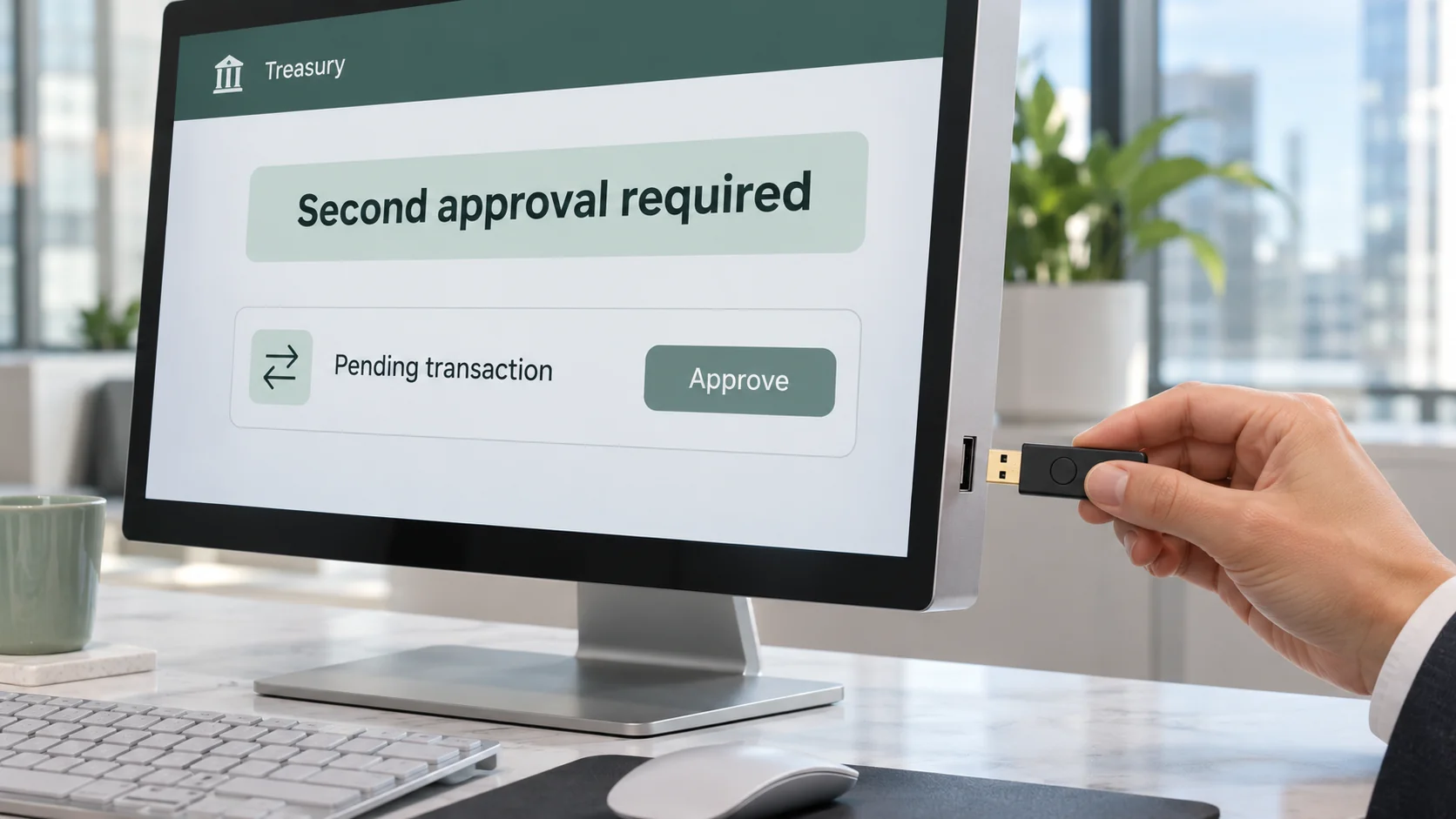
Original AI-generated illustration, not an actual Binance system. Independent approval is separate from authentication.
What could one compromised laptop authorise?
IT and business owners should prioritise:
- Containment: Managed endpoint protection, application controls and separation between ordinary work and privileged administration.
- Independent approval: Sensitive payments and production changes need genuinely separate authorisation, not two accounts accessible from one compromised machine. Authentication alone does not verify a payment’s purpose or destination.
- A tested emergency stop: Practise isolating endpoints, revoking sessions and credentials, and removing transaction permissions. Binance’s account shows that suspending customer withdrawals alone did not stop every unauthorised movement.
Ask for evidence: access reviews, tested revocation procedures and response-exercise results, not simply confirmation that security software is installed.
How Xpansion can support your next step
Xpansion Technologies can help Australian businesses review endpoint security, Microsoft 365 and cloud access, privileged permissions, and connected AI workflows.
The starting question is practical: if one employee’s laptop were compromised today, what could an attacker reach, and how quickly could you stop them?
No provider can promise immunity or guaranteed crypto recovery. The objective is to reduce exposure, limit damage and improve response readiness.
References
- FBI: Attribution of the Binance attack, 31 October 2026
- Reuters via iTnews: Binance’s account of the attack chain, 4 November 2026
- ASD’s ACSC: North Korean WaterPlum / Contagious Interview threats
- Euronews: Withdrawal resumption and Binance’s loss-cover commitment, 2 November 2026
Sources checked 4 November 2026. The attack sequence reflects Binance’s initial account as reported by Reuters, not an independently completed forensic finding. Findings and recovery figures may change. General cybersecurity information, not financial advice.



Leave a comment