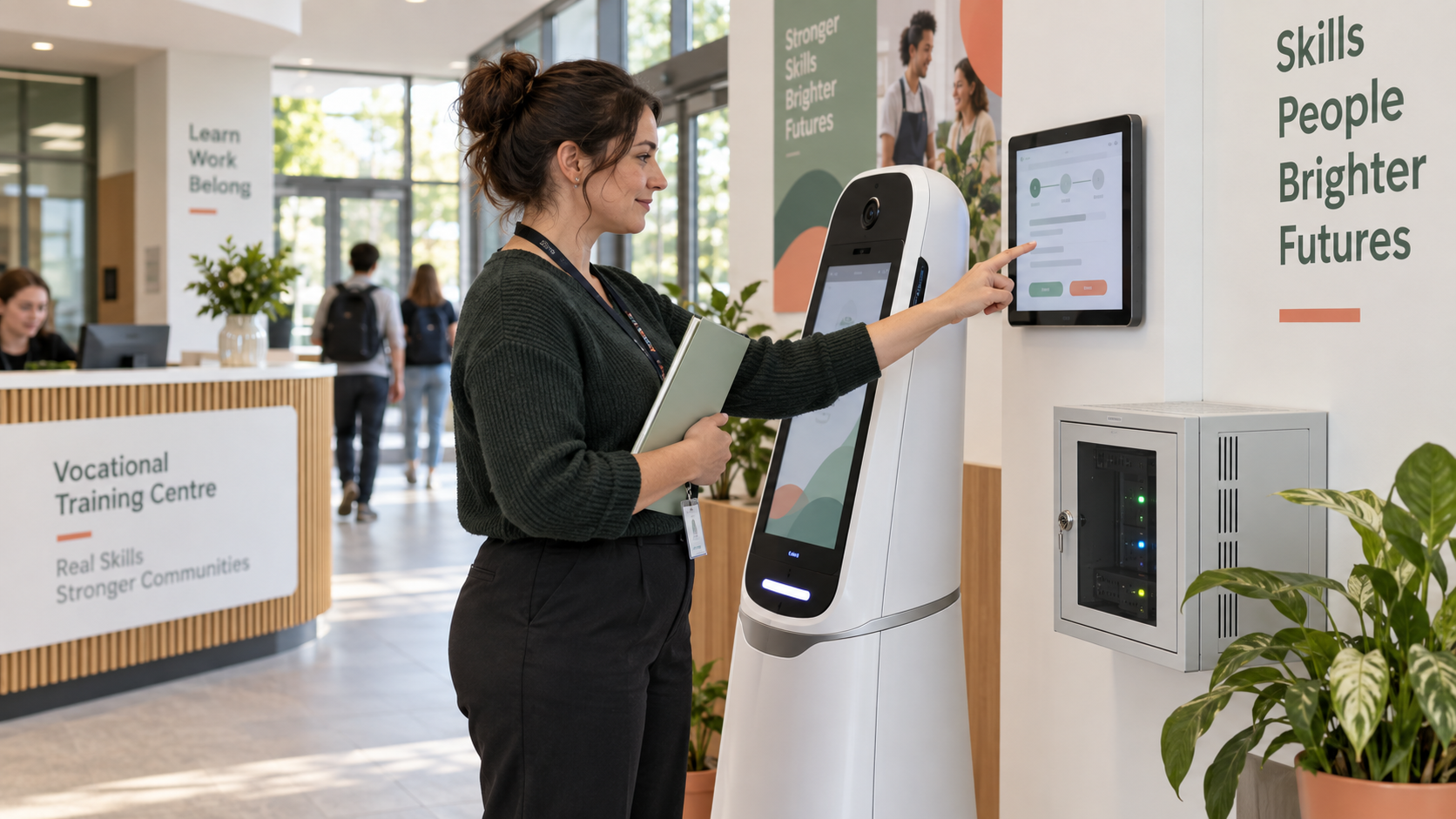
Artificial intelligence is moving from experiments into everyday business systems. The next step is agentic AI: software that can interpret a request, use connected tools and take actions across a workflow. That can save time for a small business, but it also changes the security question. An agent that can send an email, update a CRM record or create a booking needs more control than a chatbot that only produces text.
Start with low-risk work
Begin with tasks where an incorrect result is inconvenient rather than harmful. Good early candidates include sorting internal requests, preparing a draft response, checking whether a form is complete or summarising approved documents. Keep payment changes, legal commitments, staff decisions, customer complaints and access changes outside the agent’s unsupervised authority.
Map the agent’s real access
Write down every system the agent can read or change. This may include email, a CRM, calendars, cloud storage, accounting software, help desk tools and website forms. Use separate service accounts, least-privilege permissions and short-lived credentials where the platform supports them. Do not give an AI workflow a broad administrator login simply because it is faster to configure.
Put approval in the workflow
Human approval should be a visible step, not an informal promise to check the system later. Require confirmation before an agent sends an external message, changes a customer record, commits money, publishes content or handles sensitive personal information. Show the proposed action, the data used and the destination so a person can make a meaningful decision.
Monitor, test and stop safely
Keep logs of prompts, tool calls, approvals, failures and changes to the connected systems. Test how the agent behaves when it receives misleading instructions, incomplete data or an unexpected file. Give staff a simple way to pause the workflow, revoke access and continue the critical business process manually. If the agent is no longer reliable, decommission it and remove its stored data and credentials.
A practical starting checklist
- Choose one low-risk workflow and define what the agent must never do.
- List the systems, data and permissions involved.
- Assign an accountable owner and an approval point.
- Test failure cases before connecting live customer data.
- Review logs, vendor terms, privacy settings and access every month.
Agentic AI can be useful for Australian SMEs when it is introduced as a controlled business process rather than an unrestricted digital employee. The safest path is incremental: narrow scope, clear ownership, strong identity controls, human oversight and a tested fallback.
Sources
- Australian Cyber Security Centre: Artificial intelligence for small business
- Australian Cyber Security Centre: Careful adoption of agentic AI services
- National AI Centre: Guidance for AI adoption


Leave a comment