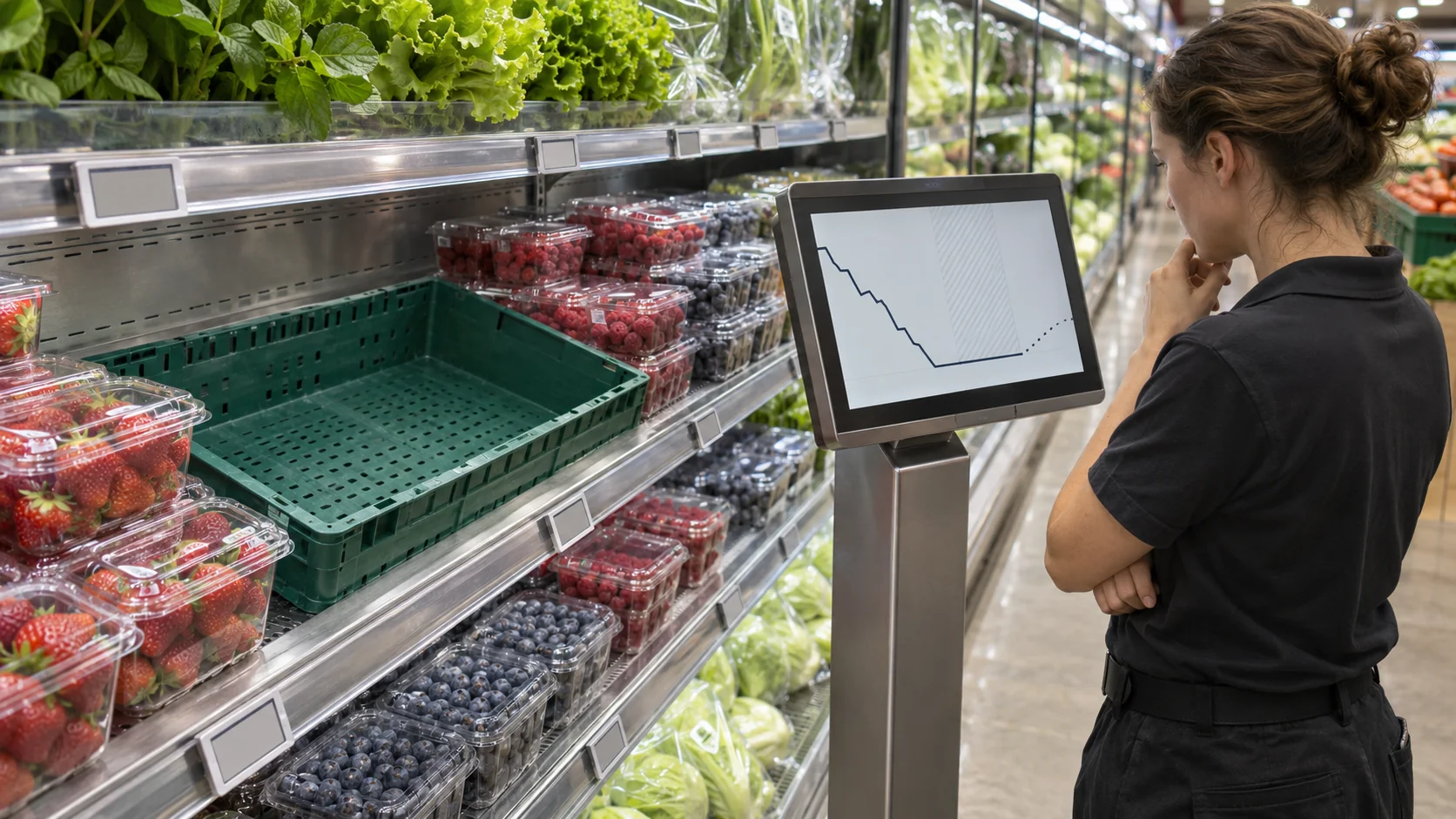
Imagine a suburban grocer sells its last punnet of strawberries at 11 am on Saturday. The till records nothing for the rest of the day. If an AI demand forecasting system treats those hours as quiet trading, it can recommend buying less for next Saturday. The till was right about what sold. It said nothing about what customers would have bought if the shelf had stayed full.
That distinction matters to a small Australian retailer buying stock with a short shelf life. Order too little and customers may buy elsewhere. Order too much to compensate for every empty shelf and the shop wears the cost of markdowns and spoilage. The aim is not to turn every missing sale into an estimate. It is to show buyers where the data can and cannot support an order.
Where AI demand forecasting can learn the wrong pattern
A machine learning model looks for patterns in past observations. A retail system might use units sold alongside the day of the week, the selling price and whether an item was on promotion. If the model is trained to predict units sold, without accounting for availability, a zero during a stockout can look the same as a zero when nobody wanted the item. Even if a day ends with respectable total sales, selling out before the busiest hours can hide part of the demand. Daily totals alone cannot show when that happened.
Wang and colleagues’ FreshRetailNet-50K research uses hourly availability labels to distinguish stockouts and explores estimating demand during those periods. It is a useful example of why the data matters, not evidence that the same model or results would transfer to an Australian shop. Demand while the shelf was empty is unobserved. A nearby store, another Saturday or sales after restocking can inform an estimate, but none tells you exactly what was missed.
Start with the records the buyer can trust
- Join sales to availability. Pick one perishable range and line up till timestamps with stock records, deliveries and a few shelf checks, by product and location. A backroom unit can appear as available in the system while the shelf stays empty. Mark uncertain periods separately rather than classifying them as low demand.
- Keep unusual trading visible. Record specials, delivery delays and large one-off purchases alongside the sales history. If an item ran out mid-promotion, neither its ordinary weekly average nor a rise in substitute sales is an exact measure of the missing demand.
- Give uncertainty somewhere to go. Ask the supplier what the model does with a confirmed stockout and whether the order screen can flag missing availability data. If it cannot distinguish the two, keep those order suggestions advisory and let the buyer check them against the shelf and the delivery schedule.
Test the buying decision, not just the chart
Run the model alongside the existing ordering process before letting it place orders. Compare suggestions against a simple baseline, such as recent comparable Saturdays when the range was available. On days you know the product stayed in stock, compare predictions against later sales. Use confirmed stockouts to check whether the model flags uncertainty rather than repeatedly lowering recommendations. Do not score a forecast against zero sales after the shelf emptied and call that a win.
Have the buyer review overrides and the store lead check whether availability records match the shelf. Agree what would justify expanding the pilot: fewer stockout hours without a rise in waste or markdowns that wipes out the benefit. Keep supplier lead times, minimum orders and remaining shelf life in the buying rules. The forecast estimates demand; it does not decide how much risk the shop can afford to carry.
If your till, stock system and ordering workflow are disconnected, Xpansion’s AI and intelligent automation services can help scope a pilot around one product range and the decisions your buyers need to keep.
References
- Australian National AI Centre: Guidance for AI adoption (accountability, testing and monitoring).
- Wang and colleagues: FreshRetailNet-50K (research paper, revised 20 November 2026).
- NIST AI Risk Management Framework Playbook: Measure (fit-for-purpose evaluation and metrics).