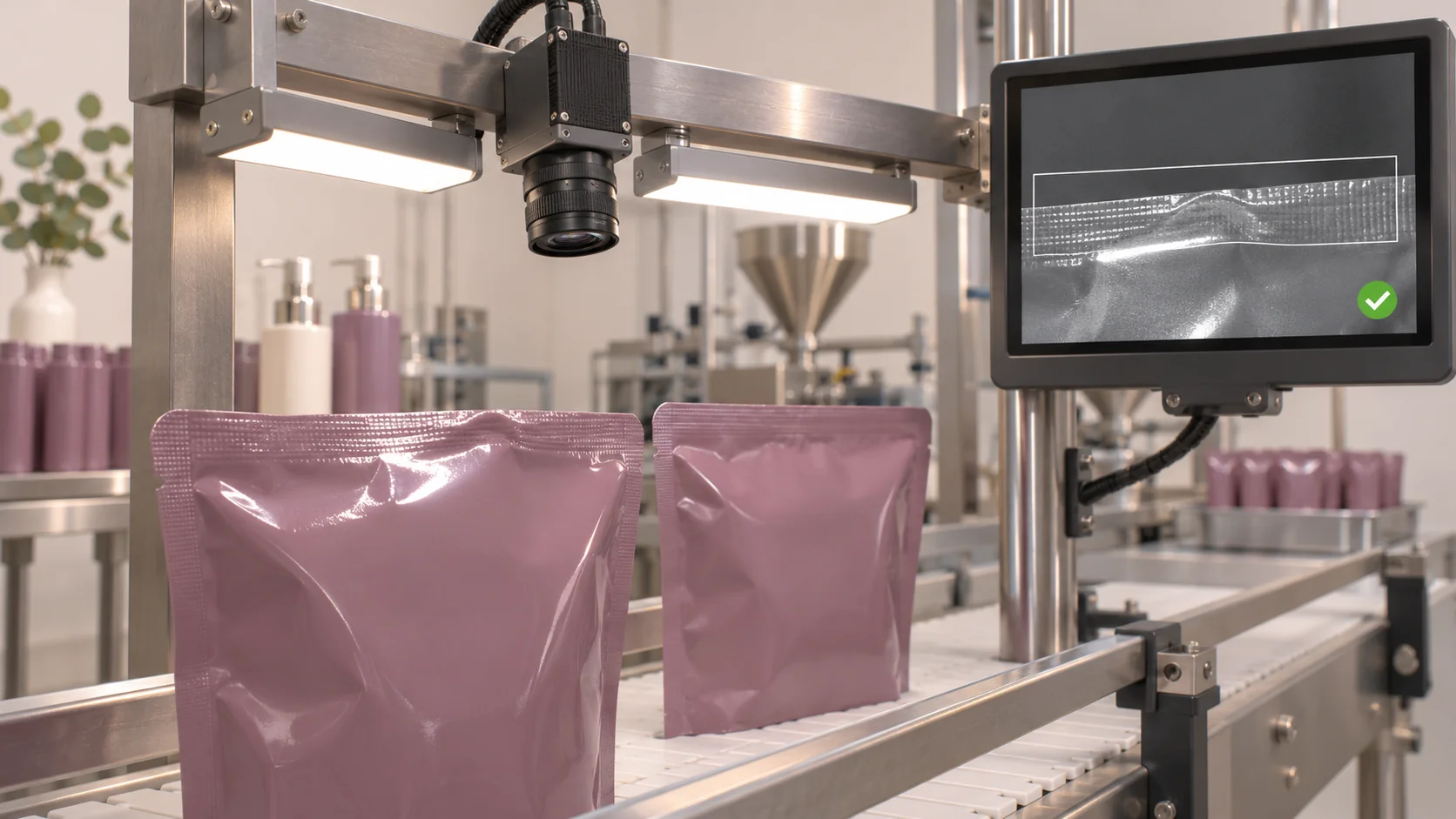
Imagine a small Australian cosmetics packer trialling AI visual inspection to check pouch seals. The system catches obvious wrinkles on the samples used in the demo. Then a customer orders the same pouch in a glossy finish. Under the line lights, a bright reflection hides part of the seam. The display still shows a pass, but the quality team has less evidence than it thinks.
In this hypothetical example, a faulty seal could put leaking stock in a customer’s hands and leave the packer sorting or replacing an entire batch. The question for the business is not whether the AI can spot a defect. It is whether the production system knows when it has not had a good enough look.
What AI visual inspection actually checks
A camera captures the pouch at a fixed point on the line. A trained model looks for image patterns associated with acceptable seals or known defects. The inspection software compares the model’s output with a threshold and can tell a controller to pass the pouch, divert it or hold it for review.
That verdict depends on what the camera captured. Glare can wash out detail; a shifted guide can move the seam beyond the inspection area; faster movement can blur a narrow wrinkle. A model may still return a strong score when it sees an unfamiliar image. That score is not proof that the whole seal was visible, and a clean-looking seam is not proof of seal strength. Keep any separate physical integrity checks required by the product specification or customer agreement.
Make the trial resemble the production line
Ask the quality lead to define what counts as a defect and what gets held before the supplier tunes the system. Keep a labelled set of representative good and defective pouches for acceptance testing, separate from any samples used to train or tune the model. Run it at normal line speeds with the different films, orientations and lighting conditions the business expects. Include borderline examples and compare results with the quality team’s judgement and physical tests where relevant.
- Count misses and rejects separately. Record defective pouches that passed and good pouches that were diverted. Report results by film type and defect type, along with the number tested. A strong overall accuracy figure can hide repeated misses on one finish, especially when most test pouches are good.
- Give poor images their own outcome. Ask the integrator to check for a visible inspection area, usable exposure and a fresh image for each item. Test what happens when an image is unreadable or missing. Route those items to a controlled hold or manual inspection rather than treating no verdict as a pass.
- Check the reject mechanism. Track marked test pouches from the camera to the reject bin at production speed. A correct AI verdict is no help if the controller diverts the wrong pouch or does not confirm a diversion.
Decide when the line goes back to manual checks
Start by recording AI decisions alongside the existing checks without letting the model release stock. Have quality staff sample accepted pouches as well as reviewing rejects; otherwise the team mostly learns about false alarms, not missed defects. Log a reference to the sample image, batch, model version and line settings so an unexpected pass can be traced.
Give the quality lead authority to pause automated release and revert to the documented manual process. Agree in advance what triggers that switch: an untested film, a moved camera or light, or a missed defect in an audit sample. Diverting more stock can slow the line; quietly passing uncertain items shifts the cost to customers. Set review capacity and escalation rules before asking operators to manage that trade-off mid-shift.
If you are considering a pilot, use your AI and automation planning to define the acceptance evidence and fallback before deciding whether the model can control release.
References
- Australian National AI Centre: Guidance for AI adoption, implementation guidance (practice 5: test and monitor).
- US NIST: AI Risk Management Framework Playbook, Measure (evaluating AI performance and documenting error rates).