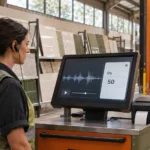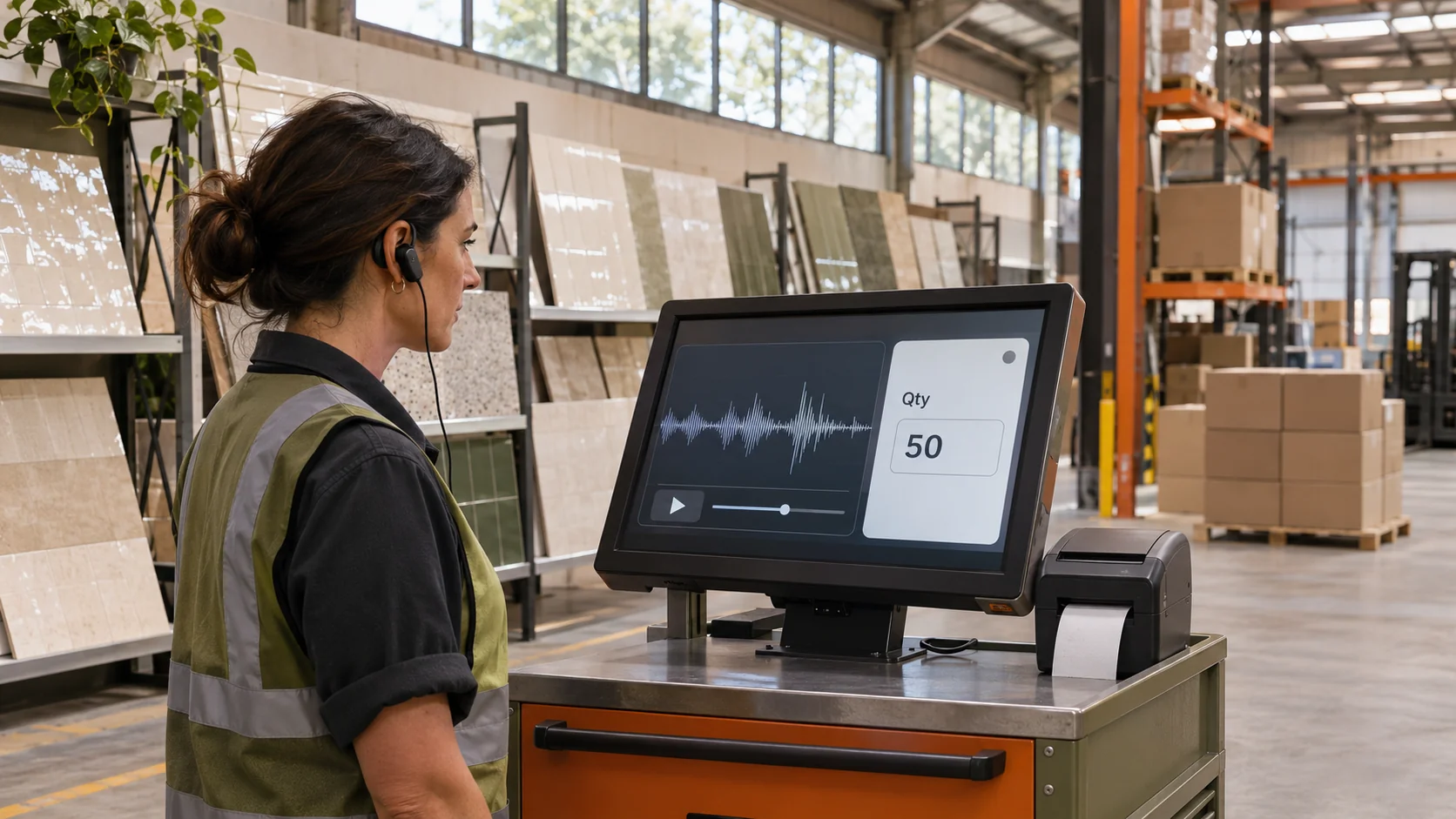
Imagine a tile supplier taking an order over the phone. The customer asks for fifteen cartons. The call recording is clear enough when the sales rep plays it back, but the draft order shows fifty. If the order system treats that number as confirmed, the first person to spot the mistake might be the customer unloading the truck. AI transcription errors can be easy to miss when the rest of the call note reads perfectly.
Where AI transcription errors become order errors
Speech recognition turns audio into likely words. A poor connection, overlapping speech or a pause can make that first step less reliable. Some workflows then use another model or a set of rules to extract a quantity, a product code or a delivery date. The order system may accept the resulting value because it is a valid number or date. That check tells you the field is usable, not that it matches what the customer said.
There are two different mistakes to look for: the transcript can be wrong, or the order draft can misread a correct transcript. A caller might say, “Make that fifteen, not fifty.” Even an accurate transcript can produce the wrong order if the extraction step picks the wrong number. A 2024 study of one version of Whisper also documented cases where the transcription added phrases absent from the audio. That finding is not a prediction for every tool or call centre, but it is a reason not to treat fluent text as proof.
For a wholesaler, one wrong number can tie up stock, trigger a second delivery and leave the customer arguing about an invoice. The same problem applies to a trades business that books the wrong site or a service team that records a provisional date as a commitment.
Let the software draft the order, not release it
- Make discrepancies visible. Put the disputed field next to playback for that part of the call, where authorised recording is available. If the audio is unclear or unavailable, ask the customer to confirm it. Asking the same model to reread the same transcript is not an independent check.
- Enforce the release rule in the order system. Keep phone-derived orders in draft until an authorised person confirms critical fields. A stock check can catch a quantity you cannot supply, but it will not catch an incorrect amount you have on hand. Test that a draft cannot trigger stock allocation, invoicing or dispatch through a background integration.
- Keep evidence of the decision. Log who confirmed the order, when they confirmed it and which critical fields changed. A written order confirmation can give the customer a chance to catch problems before dispatch, but silence should not count as confirmation where a positive check is required. Limit who can access call recordings and decide how long they are actually needed.
Measure the fields that cost you money
Ask the operations manager to test the actual phone-to-order workflow using synthetic calls that reflect your business: noisy lines, similar product codes, changed quantities and ambiguous delivery dates. Compare both the transcript and the final draft with known answers. Track errors separately for quantity, product and date, and record how many would have reached dispatch without intervention. Retest after changes to the transcription model, order template or integration. A strong overall word accuracy score can still hide errors in the few words that matter to a sale.
That approach follows the National AI Centre’s recommendation to test the system in context and give people a practical way to override it. If you are planning to connect call notes to business software, include the confirmation step in your AI adoption planning, before deciding what can safely run unattended.