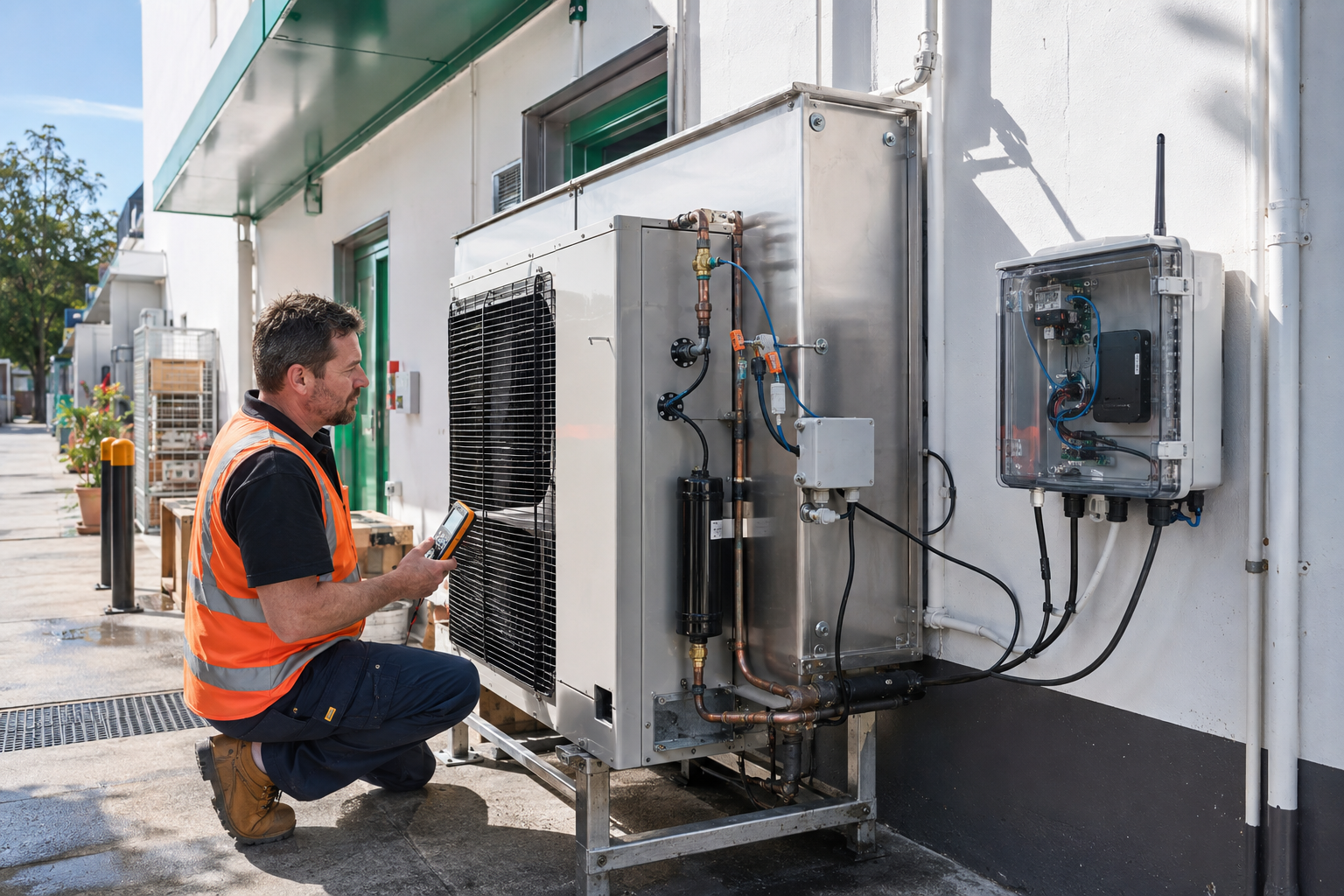
Connected refrigeration monitoring can help food businesses spot temperature problems earlier, but every sensor, gateway and remote alert also becomes part of the technology environment.
Map the complete monitoring path
Document which rooms, cabinets or display units are monitored, where sensors sit, how readings travel and who receives alerts. A sensor that is installed but not checked, or an alert that reaches nobody, creates false confidence.
Protect access and supplier support
Change default credentials, use named accounts where available and remove access that is no longer required. Confirm how refrigeration suppliers connect remotely, what they can change and how support sessions are logged.
Separate connected equipment where practical
Place monitoring gateways on an appropriate network and avoid giving them unnecessary access to point-of-sale, finance, staff or customer systems. Keep firmware and gateway software maintained, with a clear owner for updates.
Test alerts and manual recovery
Run a controlled alert test and confirm that staff know what action to take. Keep a manual temperature-check process for internet, power or sensor failures, and record who can authorise urgent maintenance or stock decisions.
Plan for records and incidents
Keep maintenance history, alert response notes and supplier contacts where the team can find them. Include the monitoring system in incident response and continuity planning so a technology problem does not become an avoidable operational surprise.
Sources
- business.gov.au: Cyber security for business
- Food Standards Australia New Zealand: Safe Food Australia

Leave a comment