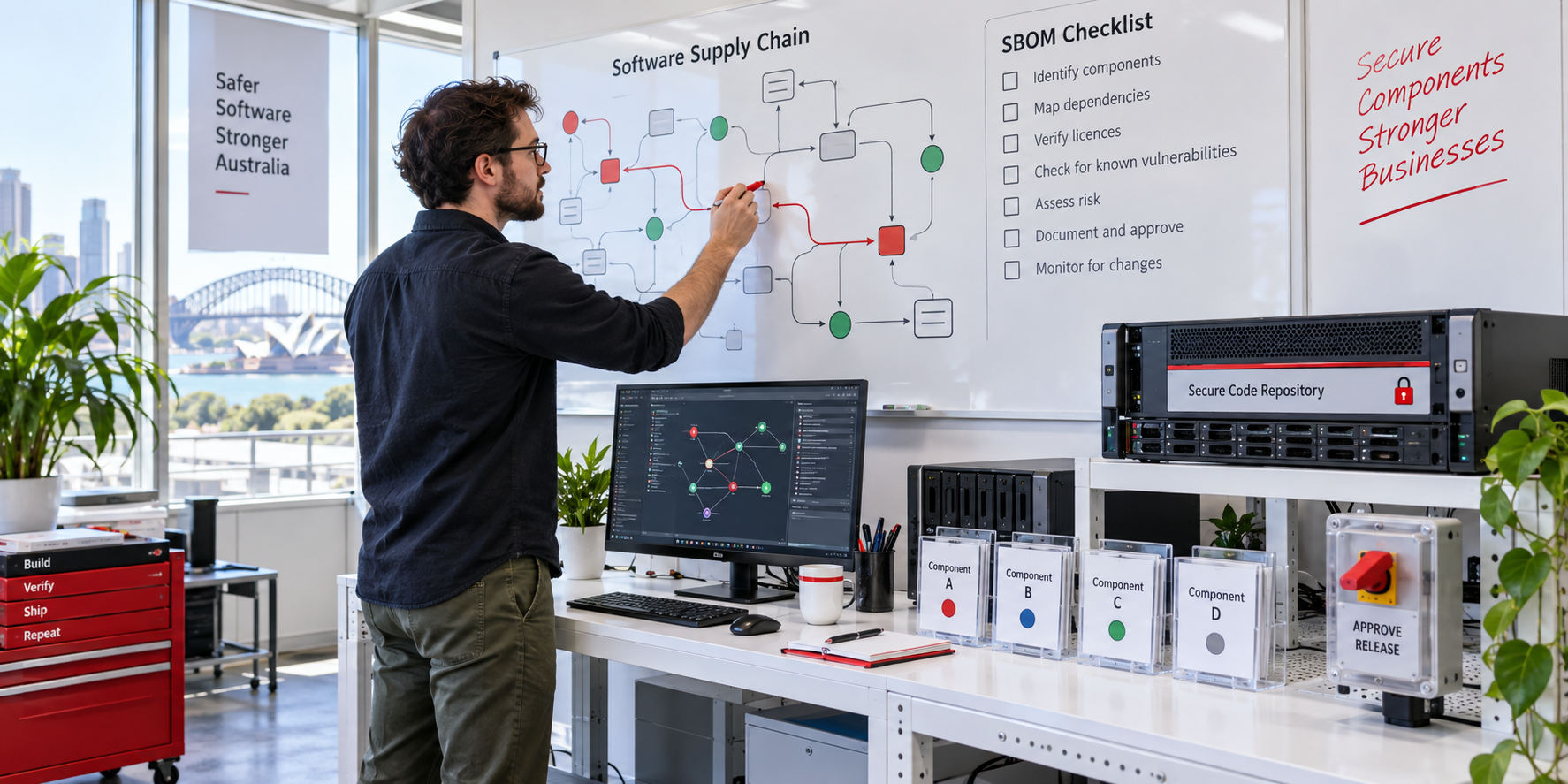
Modern business software is assembled from many components. Open-source libraries, plugins, frameworks, cloud services and transitive dependencies can all affect security, support and continuity.
What an SBOM gives the business
A Software Bill of Materials is an inventory of the components inside a software product or service. It helps a business understand what it is using, identify dependencies and respond more quickly when a vulnerability is reported. It is not a guarantee that software is safe, but it provides a practical map for better decisions.
Start with critical systems
List the applications that support customer records, payments, websites, operations and reporting. Ask each supplier what components are used, how the inventory is produced, how often it is updated and how security issues are communicated. Record the supplier, product version, data handled and business owner.
Monitor dependencies and versions
Track direct and transitive dependencies where they are available. Use vendor alerts or software-composition analysis tools to identify known vulnerabilities. Pin important versions, remove unused packages and avoid downloading components from untrusted sources. A controlled update process is safer than an unmanaged rush after a headline vulnerability.
Include suppliers and contracts
- Ask whether the vendor provides an SBOM in a usable format.
- Confirm security notification and response commitments.
- Record support and end-of-life dates.
- Define what happens if a critical component cannot be patched quickly.
Make it a repeatable SME process
Assign one owner for the software register and review it when a system changes, a supplier is added or a serious vulnerability is announced. Begin with one important application, document what you learn and improve the register over time. Clear visibility is more useful than a perfect process that nobody maintains.
A practical first action
Choose one critical software supplier this week and ask for its component inventory, vulnerability-notification process and supported-version policy. Use the answers to decide whether the supplier and its dependencies meet the business’s risk requirements.
Sources
- Cyber.gov.au: 2026 Minimum Elements for an SBOM
- Cyber.gov.au: Managing cyber supply chains
- OWASP: Software Supply Chain Security Cheat Sheet


Leave a comment