In this edition of Cybersecurity News: a software supplier removes malicious scripts from affected websites, Equinor reports an attack on parts of its IT environment, and three security advisories flag updates worth checking. The disclosures and advisories are dated 17 November 2026. Where a source gives only a date, we do not claim it falls inside an exact 24-hour window.
1. Optimizely removes malicious scripts linked to Australian websites
Report: Vendor notice: 17 November, 01:02 UTC. Researchers also updated their findings on 17 November.
Incident: Researchers first observed the Optimizely injection on 16 November.
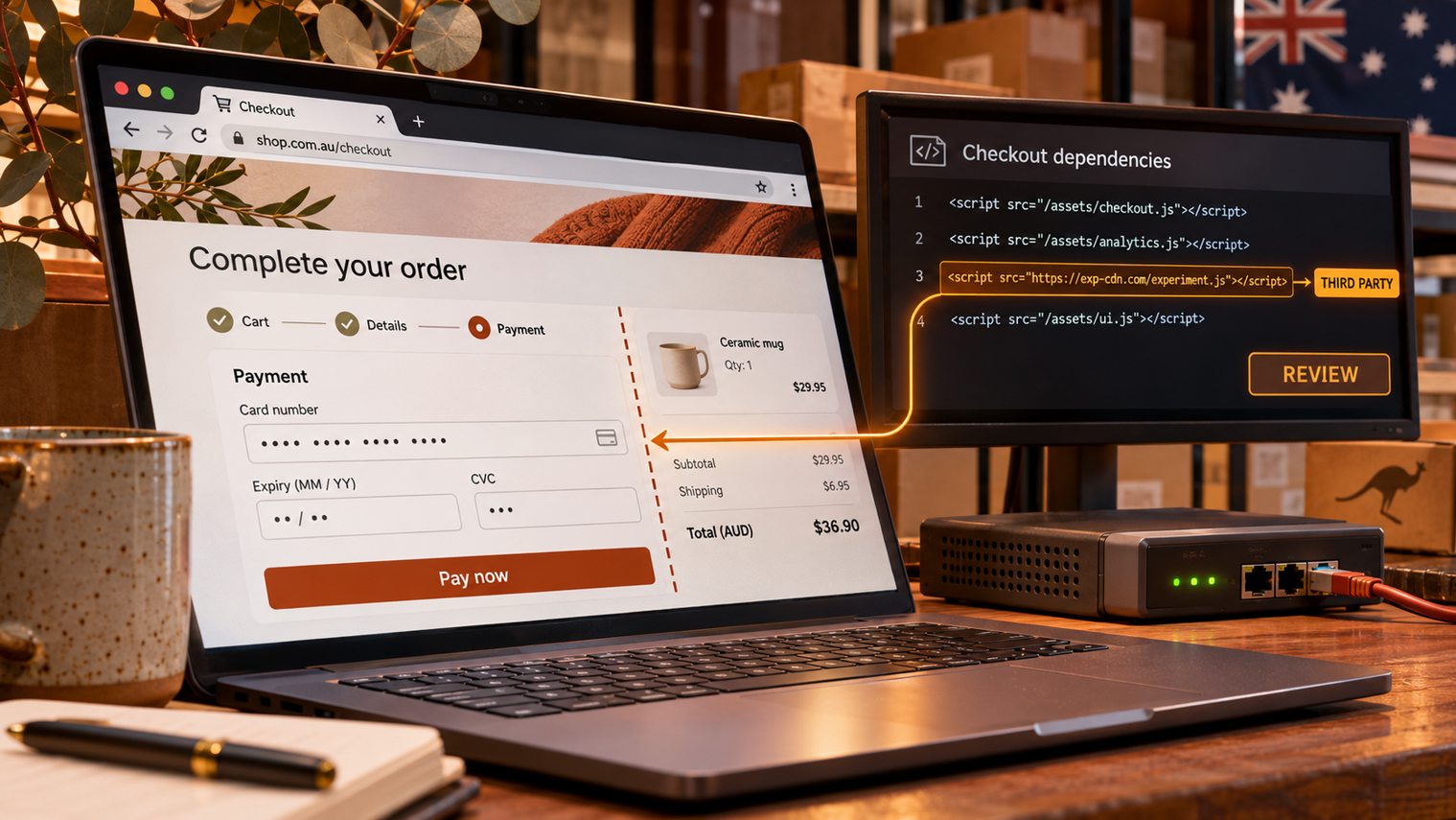
Optimizely says an unauthorised party exploited a vulnerability in its Experimentation platform to add malicious JavaScript to some customer projects. The vendor says it fixed the vulnerability, removed injected code and secured affected accounts. Report URI's investigation found 188 infected snippets belonging to 178 organisations, including Australian domains associated with Vodafone Australia, TPG Telecom, HSBC Australia and Rest Super. Those are the researcher's findings, not separate breach confirmations from each organisation.
This was a website supply-chain incident: malicious code reached pages through a service their operators already trusted. Researchers reported risks to some customer-facing payment flows, but the available evidence does not establish that every site visitor had information stolen. A listed domain is not the same as a confirmed breach of the organisation’s own network.
For Australian website operators, the marketing-platform owner and security lead should jointly check affected project histories and deployed scripts, then investigate whether exposed pages handled sensitive information. Blocking one external domain is not a complete remedy when a payload can be embedded directly in the trusted script. Customers should verify unexpected payment activity with their bank through a known channel. A cleaned website does not retrospectively establish what data was collected.
Primary source | Supporting source | Independent reporting
2. Equinor reports cyberattack on corporate IT; production continues

Report: Company first publication 17 November 2026, 17:55:02 UTC; modified 18:40:59 UTC; Reuters report dated 17 November
Incident: Ongoing attack disclosed 17 November; initial intrusion and detection times not disclosed
Norwegian energy group Equinor says it has detected an ongoing cyberattack against certain IT systems and mobilised resources to neutralise it and regain integrity. Its statement says operations and production have not been affected and there are no indications that data has been stolen. Relevant authorities are being informed. Reuters corroborates the disclosure and reports disruption to internal applications, including email according to a person at the company.
The important distinction is between corporate IT disruption and an established effect on production. The statement does not identify the entry point, attacker or affected architecture, so it would be wrong to claim that ransomware was deployed or that industrial controllers were compromised. Equally, continued production is an availability result, not proof that all corporate information remained confidential. The investigation may change the assessment.
For Australian businesses dependent on a supplier's online systems, the relationship owner should confirm which customer-facing services and information are implicated rather than infer impact from the supplier's industry. Operations and IT should check their own dependency on email, identity and enterprise applications during a disruption. Agree an independent contact route for urgent instructions, especially changes to payment details. Treat the incident as a reason to verify continuity arrangements, not as evidence of a supply interruption that Equinor has not reported.
Primary source | Independent reporting
3. CISA urges organisations to prioritise Java runtime patches

Report: 17 November 2026 (source date; exact publication time not stated).
On 17 November, the US Cybersecurity and Infrastructure Security Agency (CISA) urged organisations to address a critical vulnerability in Oracle Java, tracked as CVE-2026-114938. CISA advised prioritising affected internet-facing systems and checking Oracle’s advisory for supported fixes. The warning is not a report that every Java installation is vulnerable or compromised.
A familiar challenge is finding the runtime in the first place. Java can be packaged inside a vendor application, container image or appliance rather than installed separately. An operating-system update does not necessarily replace an application’s bundled copy. Application owners should check with their vendors before substituting an unsupported runtime.
Start with systems exposed to customers and partners. Ask who owns each update, what version is running now and how the team will confirm the updated runtime is active after deployment. If a supported fix cannot be applied immediately, follow the advisory’s temporary access controls and give each exception an owner and a review date.
Primary source | Supporting source
4. Mozilla ships high-impact security fixes in Firefox 160.0.1
Report: 17 November 2026 (source date; exact publication time not stated).
Mozilla’s 17 November advisory identifies two high-impact security fixes in Firefox 160.0.1, including one in graphics functionality on Android and another in media playback. Mozilla says the release was first offered on 17 November. The advisory identifies fixed issues; it does not establish an incident at any particular business.
Check the desktop and mobile devices that staff actually use, not just the devices on the standard Windows build. For managed browsers, use the normal software-management channel. For mobile devices, confirm the update through the managed app store or the device’s established update path rather than a link in an unexpected message.
On desktops, an update may need a browser restart before it takes effect. Check a sample of devices after rollout, then follow up on machines that are offline or reporting an earlier version. Ask your helpdesk to account for approved release channels separately rather than applying one version number to every Firefox deployment.
Primary source | Supporting source
5. CISA adds Puppet Enterprise flaw to its exploited-vulnerability catalogue

Report: 17 November 2026 (source date; exact publication time not stated).
On 17 November, CISA added a Puppet Enterprise vulnerability, CVE-2026-115731, to its Known Exploited Vulnerabilities catalogue. The addition reflects evidence of exploitation, not merely a severity score. It does not mean every Puppet deployment has been compromised. CISA’s binding federal directive applies to covered US agencies, not Australian businesses.
Configuration-management servers deserve special attention because they help administer many other systems. Identify who runs your configuration infrastructure, including any external provider, and ask them to confirm affected versions against vendor guidance. If the server is affected, prioritise a supported update and review whether it was exposed before the fix.
Keep the verification separate from the deployment ticket. Record the version after remediation, review relevant management logs for unexpected changes and follow your incident response process if something looks wrong. A successful update closes an identified weakness; it does not settle whether earlier access occurred.
Primary source | Supporting source
How Xpansion can help
Xpansion Technologies can help Australian organisations identify third-party scripts, check security updates across managed devices and confirm who owns remediation. Start by asking your IT provider for a short list of affected systems, the update owner and how completion was verified.
Sources
- Optimizely removes malicious scripts linked to Australian websites
- Equinor reports cyberattack on corporate IT; production continues
- CISA urges organisations to prioritise Java runtime patches
- Mozilla ships high-impact security fixes in Firefox 160.0.1
- CISA adds Puppet Enterprise flaw to its exploited-vulnerability catalogue