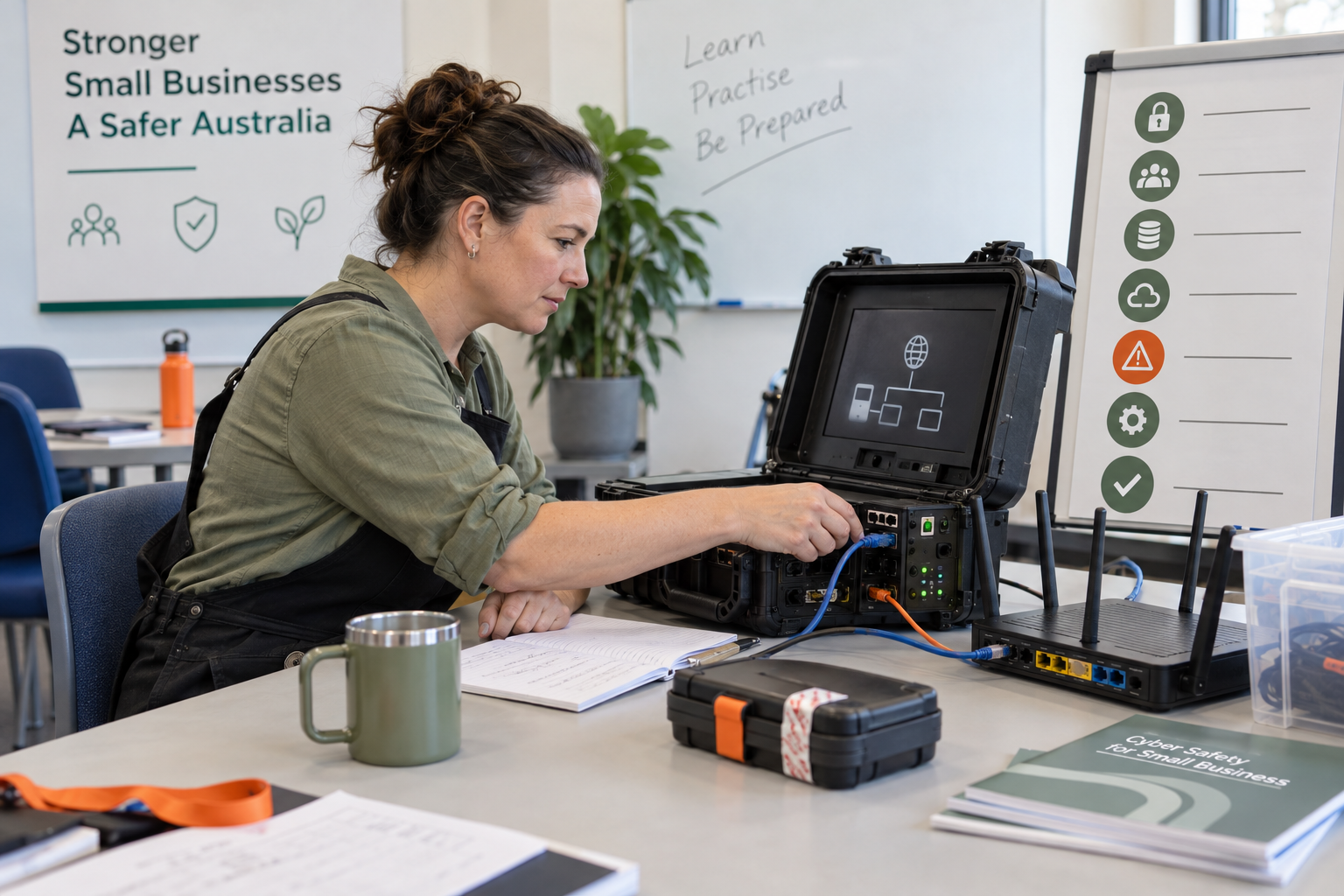
Cyber security is a business responsibility, not only an IT task. A compromised account, unpatched device, lost backup or unsafe AI tool can affect customer trust, cash flow and day-to-day operations.
Seven practical checks
- Protect accounts. Use unique passwords, multi-factor authentication and named accounts. Remove access that staff no longer need.
- Update the basics. Keep operating systems, applications, browsers, routers and phones updated. Replace unsupported technology before it becomes a permanent weakness.
- Back up and test recovery. Keep backups separate from everyday accounts and test that important files can actually be restored.
- Train staff against common attacks. Make it easy to report suspicious messages, payment changes and unexpected login prompts.
- Know your devices and data. Maintain a simple inventory and decide where customer, employee and business information may be stored.
- Plan for incidents. Write down who makes decisions, who contacts suppliers and what evidence must be preserved.
- Govern cloud AI use. Check what a tool collects, where information is stored, whether it is used for training and how outputs are reviewed.
Make the checklist practical
Start with the systems that would hurt most if they stopped working. Assign an owner for each check, record the current gap and set a review date. A short monthly review is more useful than a policy document nobody opens.
Sources
- Cyber.gov.au: Small business cyber security handbook
- Cyber.gov.au: Artificial intelligence for small business
- OAIC: Guidance on privacy and commercially available AI products


Leave a comment