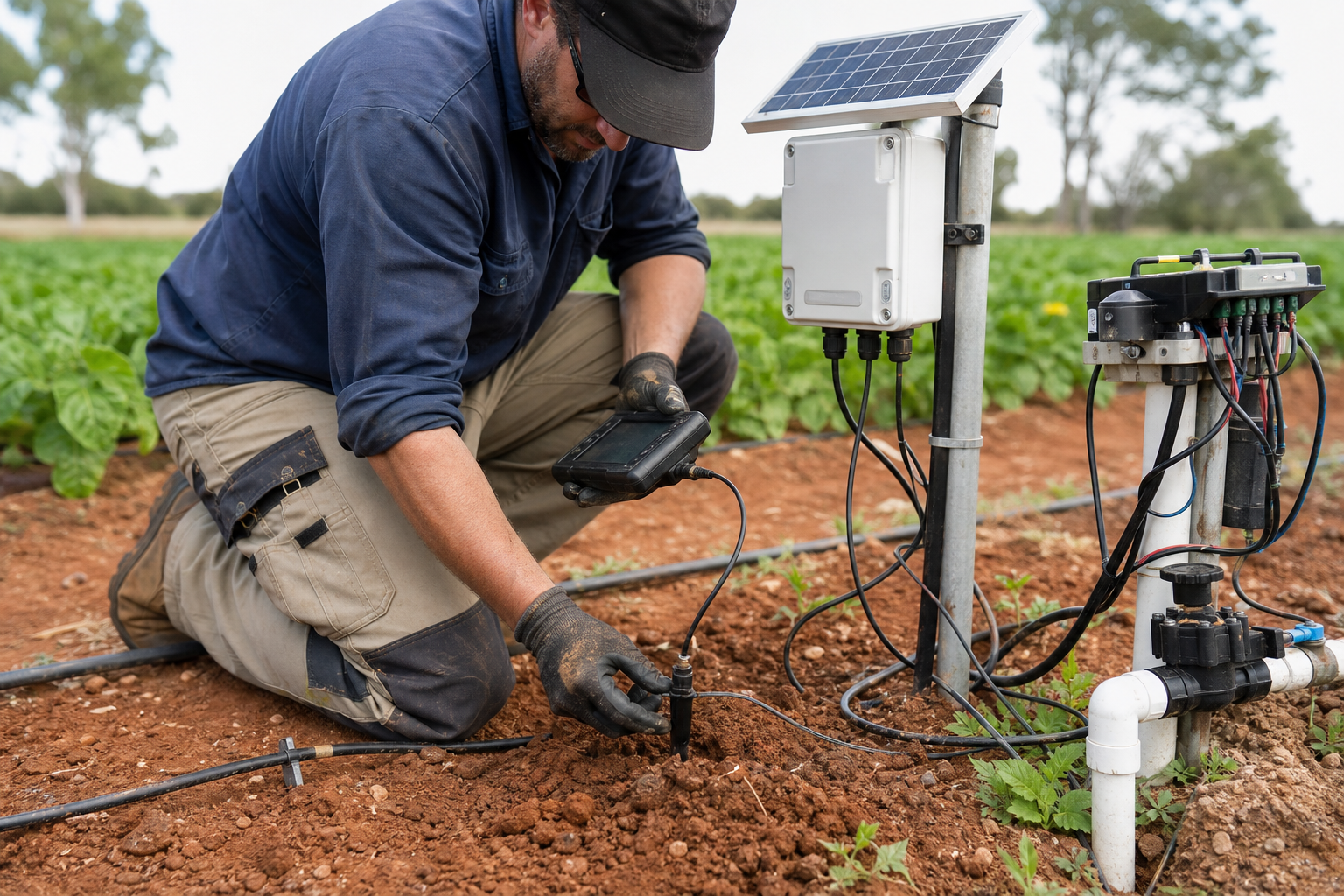
Smart irrigation can help an Australian business manage water, crop conditions, maintenance and daily operations. Soil-moisture sensors, irrigation controllers and remote monitoring can reduce manual checks, but they also create a connected technology workflow that needs security.
Map the connected system
Start with a register of every sensor, gateway, controller, SIM or network connection, cloud account and supplier. Record where each device is installed, what it can control, how it is updated and who supports it. This makes it easier to spot forgotten equipment and respond when a device is replaced or moved.
Protect accounts and remote access
Use named accounts and multi-factor authentication for monitoring and irrigation platforms. Avoid shared administrator credentials, remove former staff and contractors promptly, and separate viewing permissions from the ability to change watering schedules or valve settings. Review vendor remote access before maintenance begins and after it ends.
Separate operational devices
Ask whether gateways and controllers can use a controlled network or connection rather than sitting alongside everyday office devices. Limit the services they can reach, disable unused remote features and keep firmware, certificates and mobile apps current. Physical enclosures should also be protected from casual tampering.
Review data and supplier exposure
Sensor data may reveal production conditions, site locations, operating schedules or customer information. Understand what the platform collects, where it stores information, who can view it and how long it is retained. Include cloud monitoring and support providers in the business security and privacy review.
Keep a manual fallback
Document what happens if the internet, gateway, controller or cloud service is unavailable. Keep local operating instructions, supplier contacts and a safe manual process for irrigation and maintenance. Test the fallback after major network, firmware or supplier changes.
Connected irrigation can deliver useful efficiency gains, but disciplined access, update, privacy and recovery controls help keep the technology from becoming a new operational weakness.
Sources
- business.gov.au: Cyber security for business
- OAIC: Privacy guidance for organisations and government agencies



Leave a comment