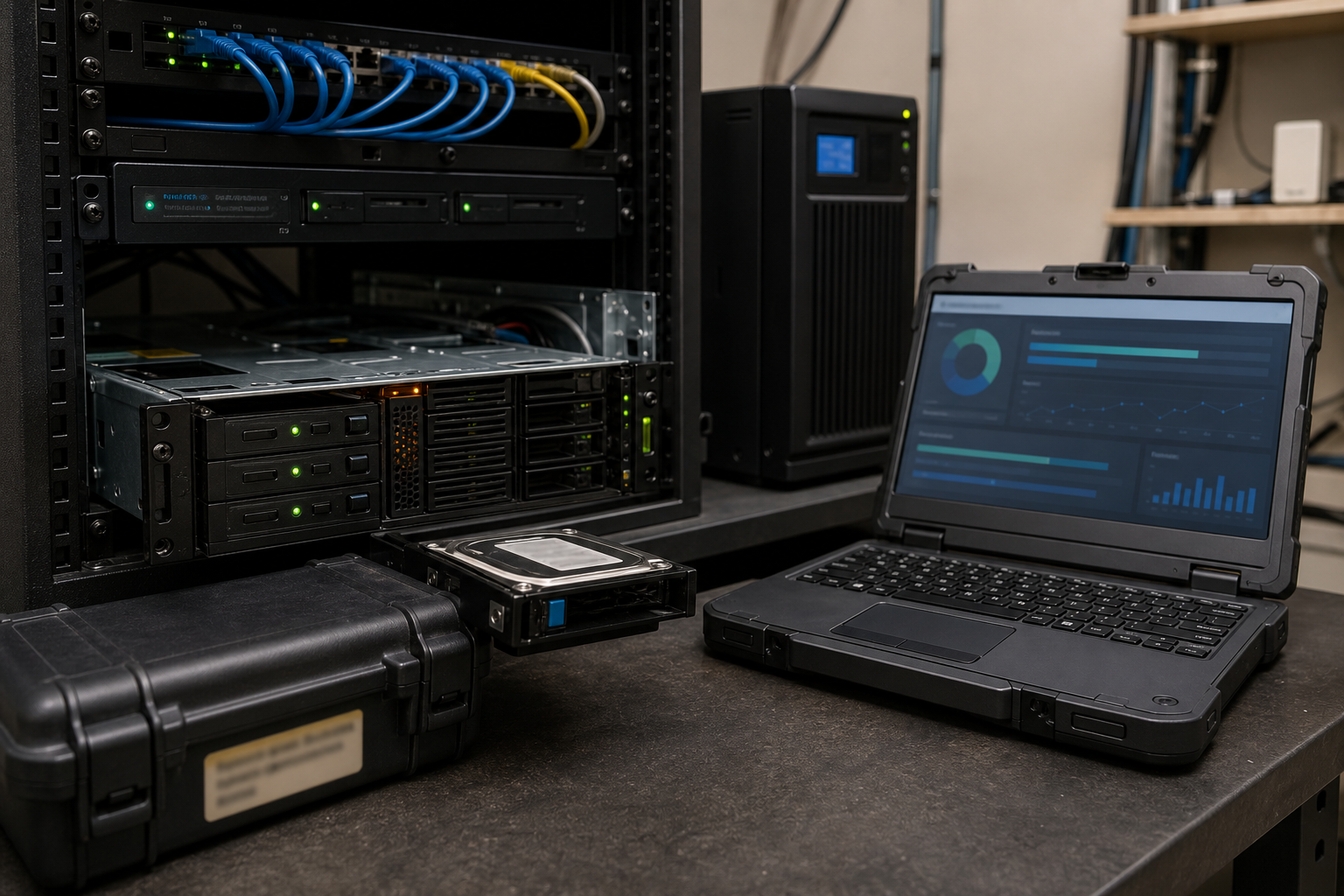
Cloud backup is useful only when a business can restore the right information quickly and confidently. A dashboard showing that a backup completed is not the same as proving that customer records, finance files, website data or shared documents can be recovered.
Why restore testing matters
Small businesses often discover backup weaknesses during a stressful event: a compromised account, a failed device, accidental deletion, a ransomware incident or a cloud configuration mistake. If the restore process depends on one person, an undocumented password or a backup format nobody has tested, recovery can take much longer than expected.
A practical restore checklist
- List the systems that would stop the business operating, then assign a recovery priority to each one.
- Keep more than one recovery path, including an offline or separately protected copy where appropriate.
- Test a file restore first, then test a larger system or application recovery in a controlled environment.
- Record how long each step takes, which permissions are required and who can approve the recovery.
- Check that restored data is complete, usable and protected by the same access controls as the original.
- Review retention periods and deletion settings so a mistake is not copied everywhere.
What Australian SMEs should document
Keep a short recovery runbook with system owners, backup locations, escalation contacts, recovery order and a test history. Business owners should also understand what personal information is held, who can access it and what must happen if a data incident affects customers or staff. The OAIC explains that eligible data breaches can create notification obligations, so incident readiness should include both technical recovery and privacy decisions.
Make the test routine
Schedule a small restore test every month and a broader recovery exercise at least twice a year. After software, supplier or network changes, repeat the relevant test. The goal is not a perfect document. It is a repeatable process that a trusted person can follow when the usual administrator is unavailable.
For Australian SMEs, reliable backup is a business process, not just a cloud subscription. Xpansion Technologies can help review backup design, access controls, recovery priorities and practical restore testing.
Sources




Leave a comment