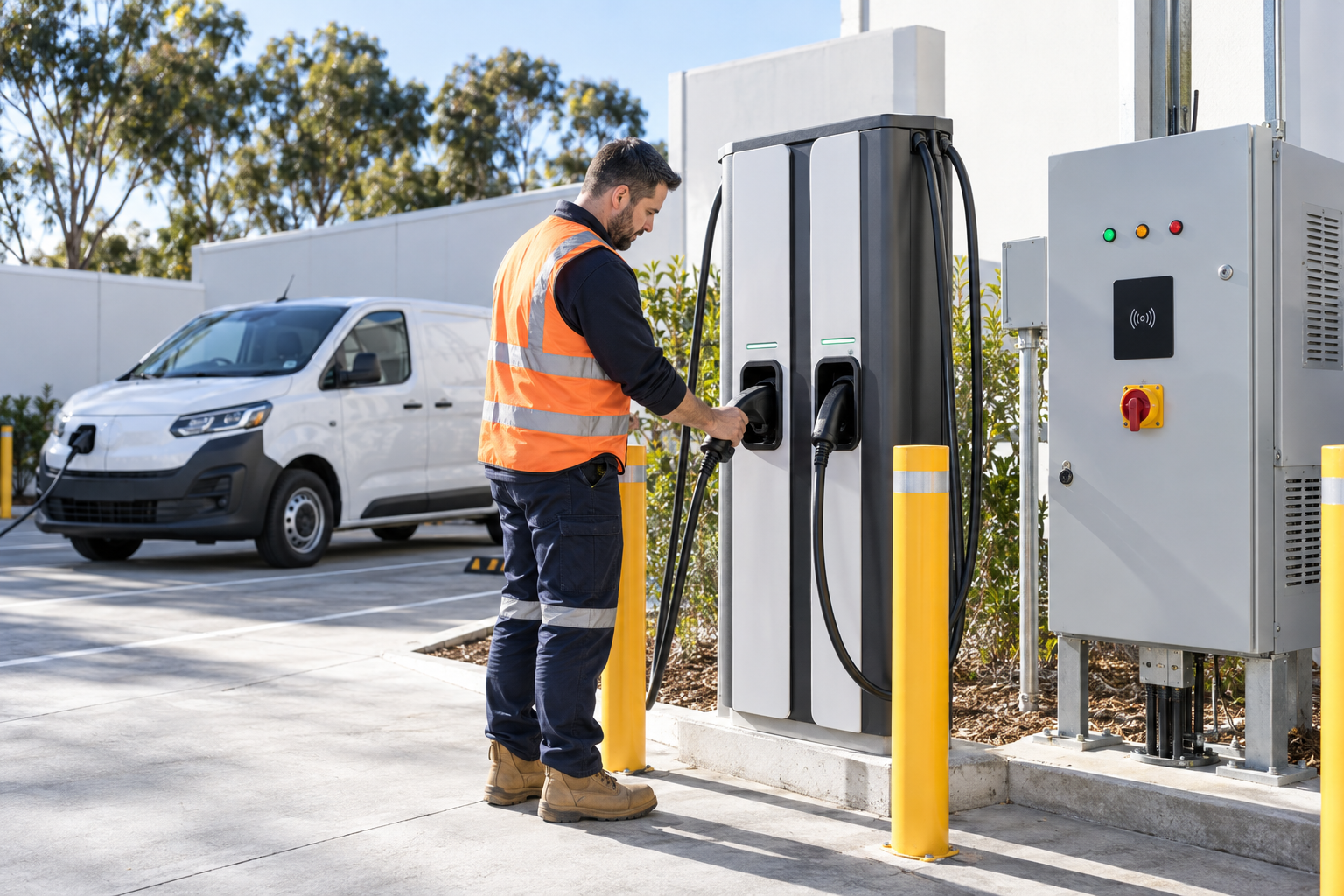
Commercial electric vehicle charging is increasingly part of normal business operations. For a trades company, delivery fleet or facilities team, a charger can affect vehicle availability, access permissions, energy costs and customer information.
Map the charging environment
Record every charger, energy-management controller, access reader, mobile application, cloud account and supplier connection. Identify who can change settings, add users, view charging history or provide remote support.
Protect access and networks
Use named accounts, strong authentication and least-privilege administration. Change default credentials, remove former staff promptly and separate charging management from the main business network where practical. Treat supplier remote access as a controlled exception, not a permanent open door.
Protect information
Charging platforms may hold driver details, vehicle identifiers, site access records, schedules or payment information. Check what is collected, where it is stored, who can access it and how long it is retained. Avoid giving a supplier more business information than the service needs.
Plan for outages
Test what happens if the charger, internet connection, authentication service or supplier platform is unavailable. Keep a documented manual process for vehicle allocation, charging access, emergency isolation and support escalation. Make sure essential operations can continue safely.
Review the supplier relationship
Ask how updates are delivered, how incidents are reported, how accounts are recovered and how data can be exported or deleted when the contract ends. Include charging systems in regular access reviews and incident exercises.
Sources


Leave a comment