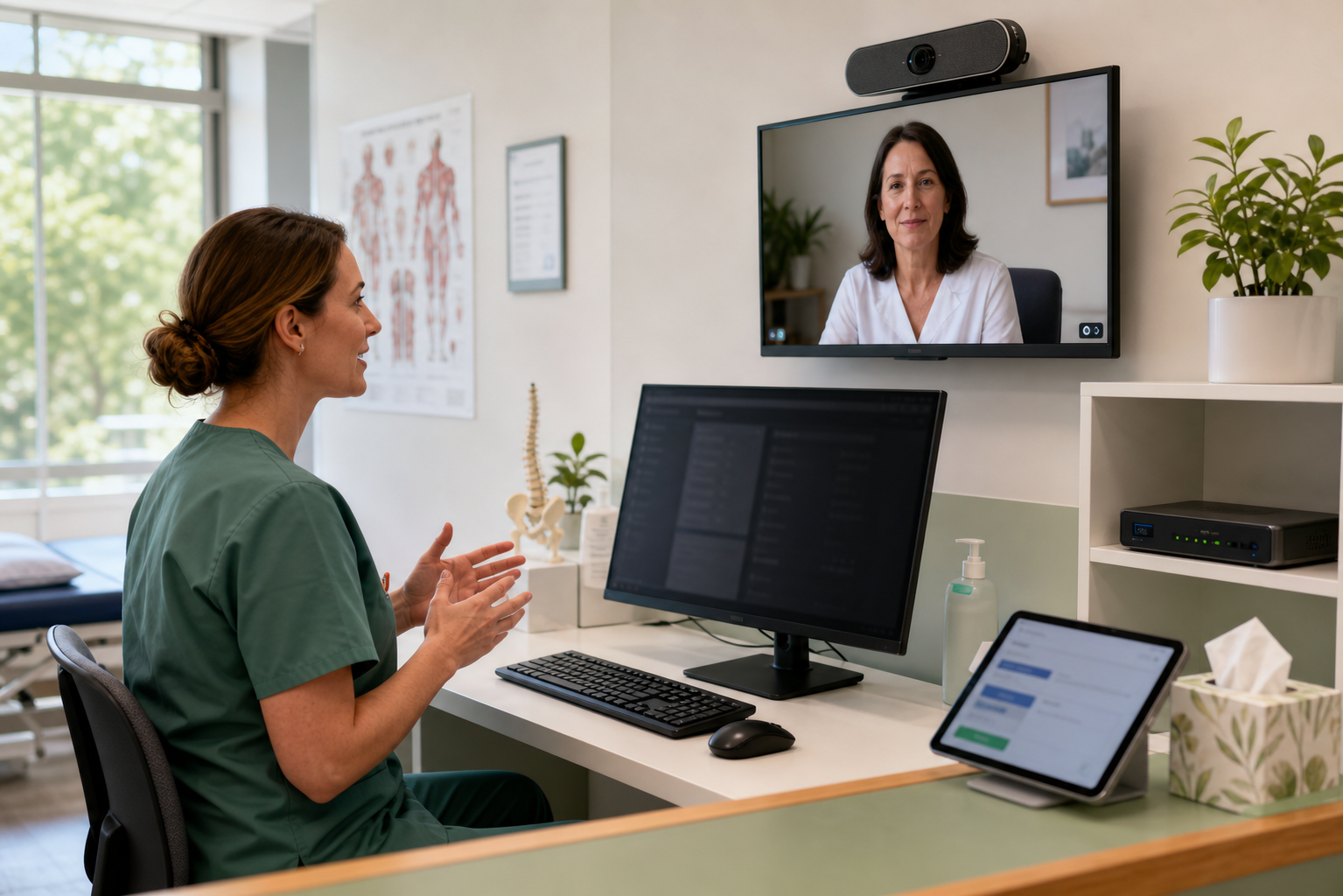
Telehealth can make care more accessible and convenient, but it also means a small business is handling sensitive information across cameras, devices, software accounts, networks and cloud services.
Choose platforms carefully
Use approved telehealth and patient-management platforms with clear privacy, recording and retention settings. Confirm where information is stored, who can access it and how support providers handle it.
Control accounts and devices
Give every worker an individual account, use strong authentication and remove access promptly when roles change. Keep clinic computers, tablets, cameras and browsers patched and protected by a managed security process.
Protect the consultation
Check camera, microphone, screen-sharing and recording permissions before each appointment. Use a private room, verify the patient where appropriate, and avoid copying clinical information into personal devices or informal chat apps.
Plan for incidents and outages
Document what staff should do if a device is lost, an account is compromised, a record is sent to the wrong person or the telehealth service is unavailable. Keep essential contact and recovery procedures accessible without relying on the affected system.
Sources
- Australian Government business.gov.au cyber security guidance
- Office of the Australian Information Commissioner health information guidance


Leave a comment