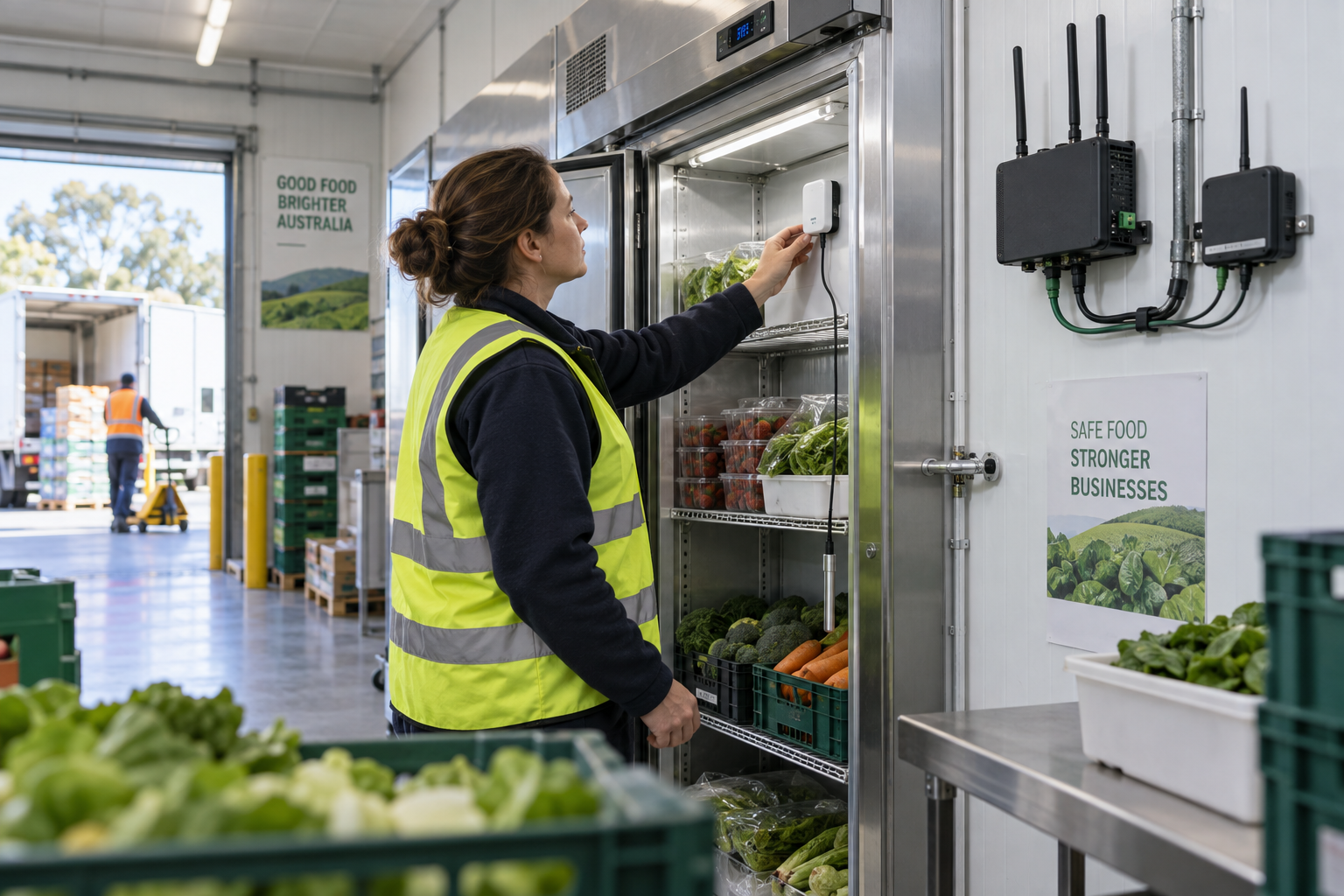
Connected refrigeration monitoring can help a food business detect temperature problems earlier, but it also creates another technology pathway that needs sensible protection. A wireless probe, gateway, cloud dashboard and mobile alert may sit between a fridge and a business decision about stock, safety or a supplier delivery.
Why the technology needs a business owner
Temperature monitoring is not just an equipment purchase. The business should know which device measures the temperature, where the readings are stored, who receives alerts, what happens when the internet fails, and how staff confirm a genuine fault. A dashboard that nobody checks is not a control.
Food Standards Australia New Zealand explains that potentially hazardous food needs to be kept within safe temperature requirements, and that time between 5°C and 60°C must be managed carefully. Digital monitoring can support that work, but it does not replace staff procedures, calibrated thermometers or a clear response plan.
Five practical controls for SMEs
- Map the system. Record each probe, gateway, router, cloud account, mobile alert and person responsible. Include the make, model, location and supplier contact.
- Separate the device network. Put refrigeration sensors and gateways on an appropriate network segment rather than allowing them to share unrestricted access with office computers, point-of-sale systems or staff devices.
- Protect accounts. Use unique administrator credentials, multi-factor authentication where available, least-privilege access and a documented offboarding process for contractors and former staff.
- Plan for outages. Decide how staff will check temperatures if the cloud service, gateway, power or mobile connection fails. Keep a manual thermometer and a simple paper or offline record available.
- Test the alert path. Run a controlled test so the business knows an alert reaches the right person, at the right time, with enough information to act. Review the test after staff changes or supplier changes.
Ask suppliers better questions
Before buying or renewing a monitoring service, ask how devices are updated, how long logs are retained, whether data can be exported, how accounts are recovered, what happens when the subscription ends, and how the supplier handles a security incident. Ask whether the gateway can operate safely during an internet interruption and whether alerts can use a second channel.
Build a short response card
Write a one-page procedure for a high-temperature alert: who checks the physical temperature, who protects or moves the stock, who contacts the refrigeration technician, who records the event and when the business escalates it. Include a separate step for a suspicious login, unexpected device change or loss of cloud access. This keeps food-safety action and cyber action connected without making either one dependent on a single dashboard.
Cyber.gov.au advises small businesses to understand their technology, secure accounts, manage updates and prepare for common cyber threats. Connected refrigeration is a practical example of why those basics matter outside the office.
Sources
- Cyber.gov.au Small business hub
- Cyber.gov.au: An introduction to securing smart places
- Food Standards Australia New Zealand: Food safety for food businesses
- Food Standards Australia New Zealand: Food temperature and thermometers
Leave a comment