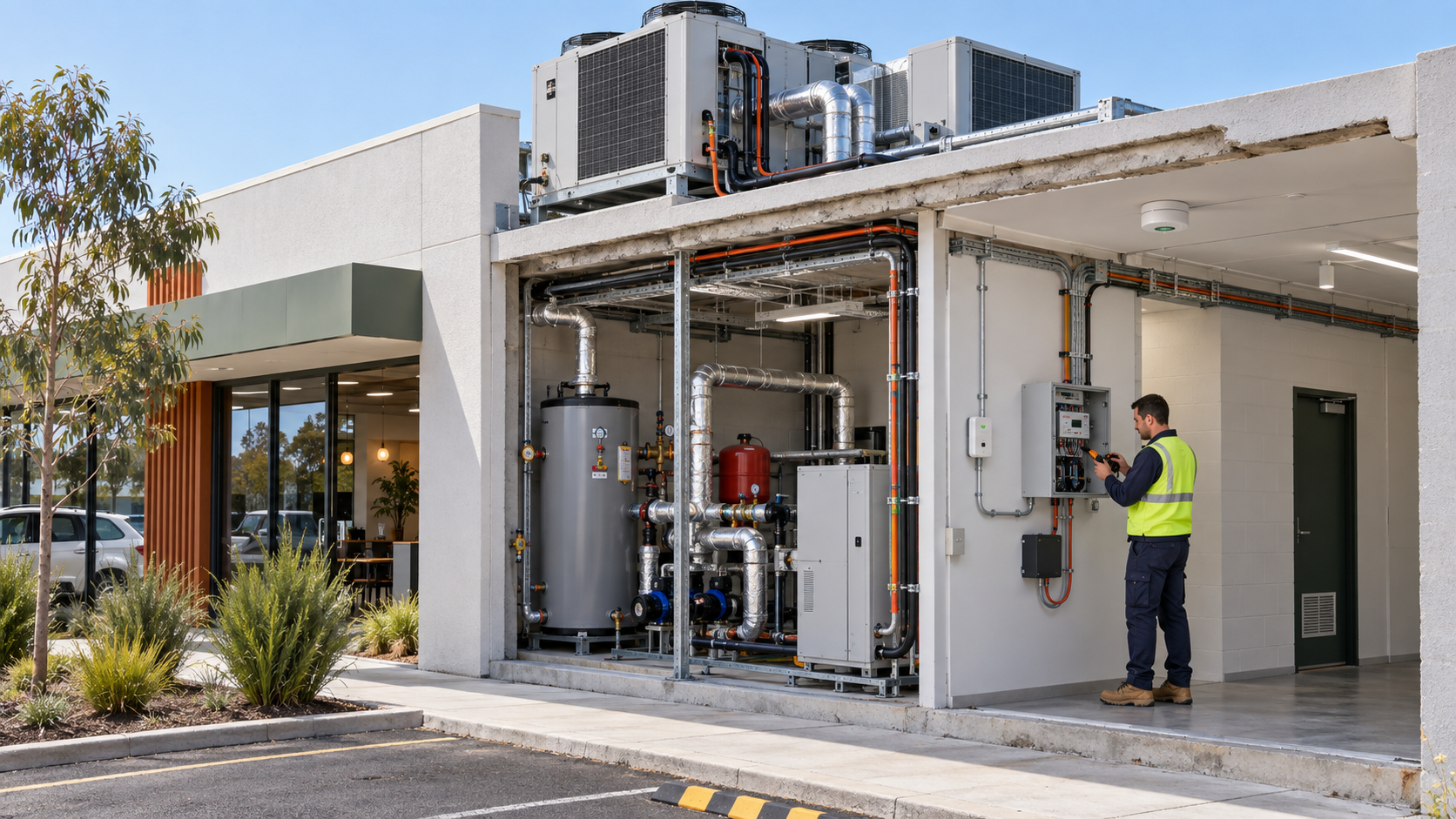
Connected building systems can make a workplace more comfortable and efficient, but HVAC controls, occupancy sensors, air-quality devices and remote management gateways also become part of the business technology environment.
Know what is connected
Keep an inventory of controllers, sensors, gateways, mobile apps, cloud services and supplier accounts. Record ownership, network location, support contacts, update arrangements and what operational or occupancy data is collected.
Protect access and separate systems
Change default credentials, use individual administrator accounts and restrict remote support to approved times and methods. Where practical, separate facilities technology from staff, guest, point-of-sale and other critical systems.
Update safely and plan for failure
Use documented maintenance windows, confirm updates with the supplier and test normal operation afterwards. Prepare a response plan covering account compromise, suspicious network activity, loss of cloud access, sensor failure and safe manual operation.
Review privacy and continuity
Check whether occupancy or environmental data can identify people, who can access it and how long it is retained. Give the facilities system a named owner and include it in business continuity planning so a network or controller outage does not create an unmanaged operational problem.
Sources


Leave a comment