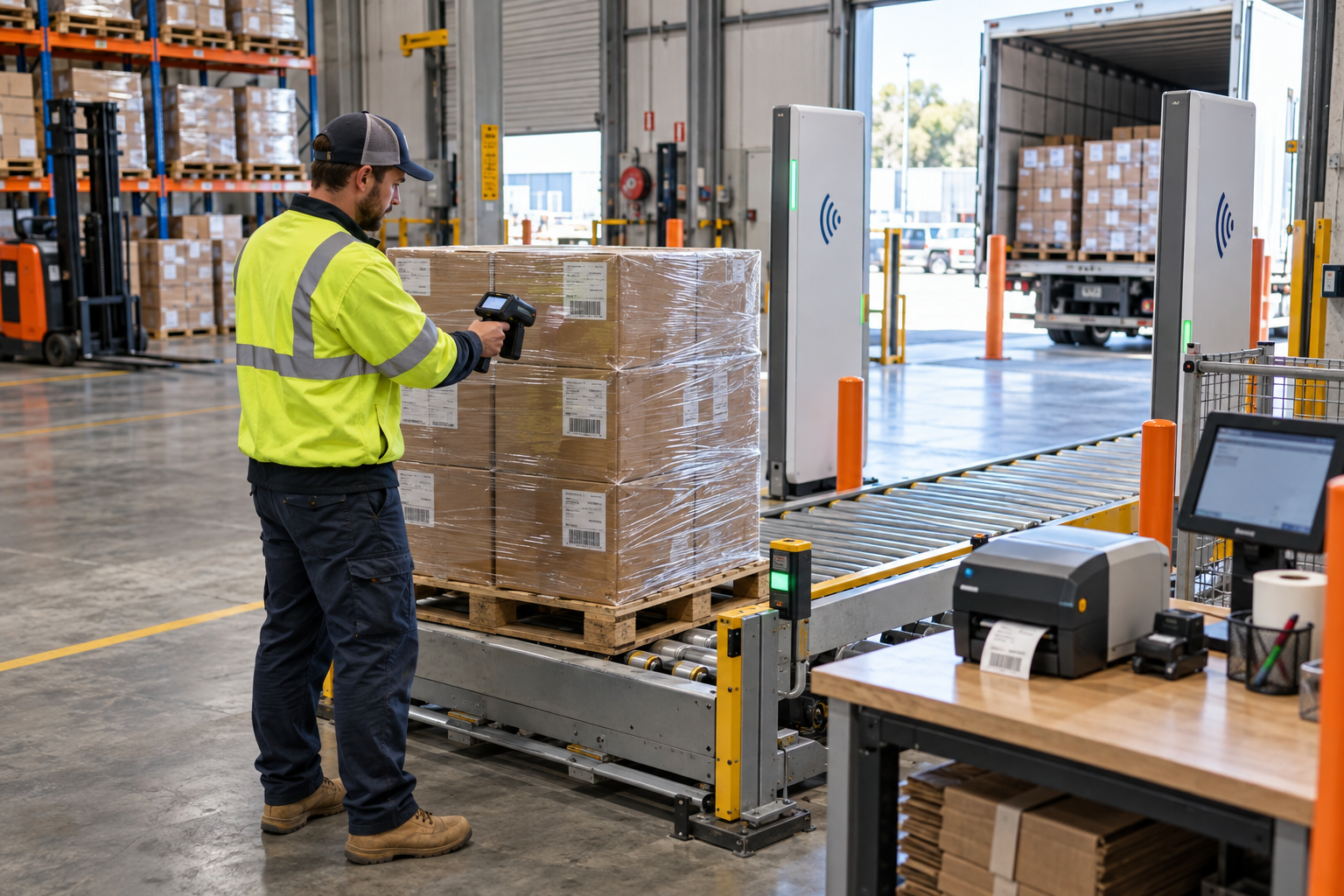
RFID and barcode systems help Australian small and medium businesses receive stock, locate products and dispatch orders with less manual work. They also connect handheld devices, portal readers, label printers, warehouse software and business data.
Know every connected device
Keep an inventory of scanners, RFID readers, portal antennas, printers, gateways, applications and user accounts. Record ownership, support contacts, update arrangements and what inventory or customer information each system can access.
Protect accounts and supplier access
Change default credentials, use individual accounts and remove access when staff or contractors leave. Review remote support permissions and require multi-factor authentication wherever the platform supports it. Avoid shared administrator logins that make activity difficult to trace.
Separate warehouse systems where practical
Warehouse devices should not automatically have unrestricted access to guest Wi-Fi, finance systems or other critical services. Use sensible network separation and restrict integrations to the data and actions the workflow actually needs.
Prepare for outages and bad data
Test manual receiving, picking and dispatch procedures. Keep a safe process for duplicate scans, incorrect labels, lost devices, system outages and suspected account compromise. Recovery planning matters because inaccurate inventory can disrupt customers even when no security incident has occurred.
Sources


Leave a comment